Mowrer takes helm of AgriLife Extension Soil, Water and Forage Testing Laboratory
State soil expert to expand testing, bring innovation and leadership to serve farmers and homeowners
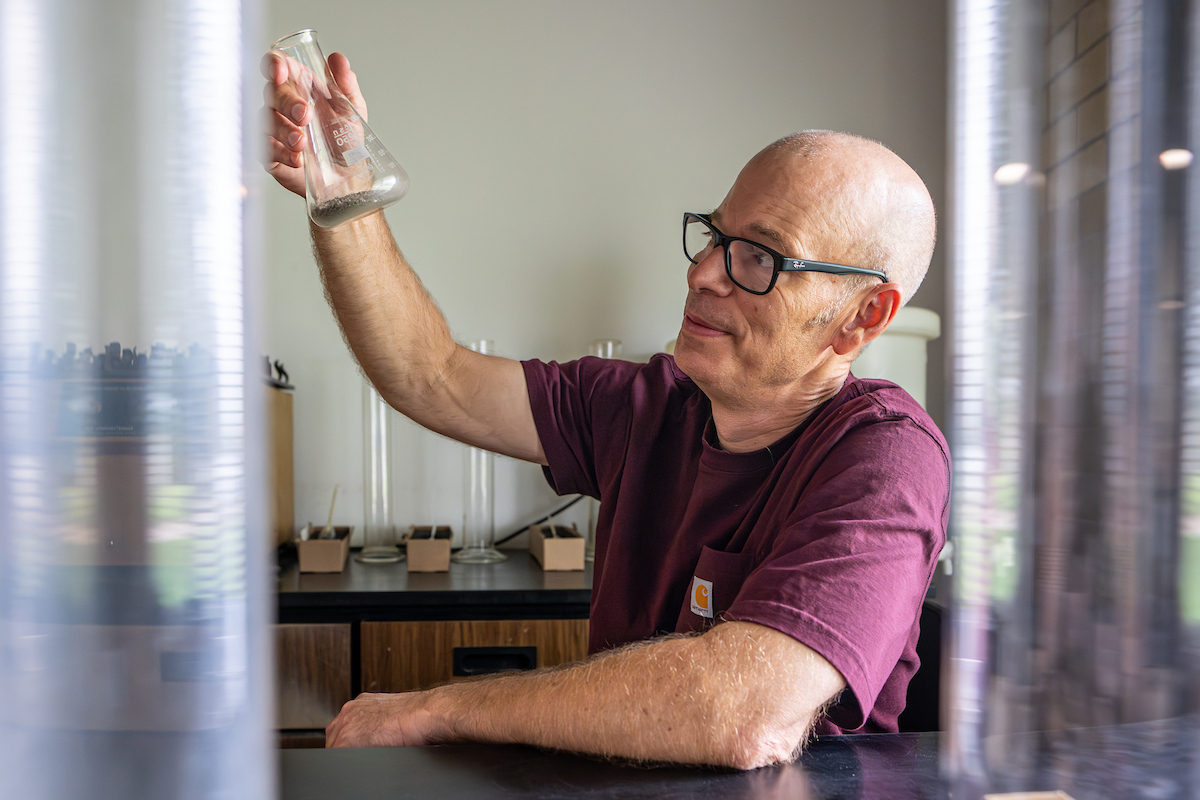
Jake Mowrer, Ph.D., Texas A&M AgriLife Extension Service state soil nutrient and water resource specialist, is the new director of the agency’s Soil, Water and Forage Testing Laboratory in Bryan-College Station.
The testing laboratory provides soil nutrient, pH, salinity and soil textural analyses with a primary focus on maintaining or improving plant growth, as well as forage and plant tissue testing. Services also include testing non-drinking water, such as irrigation and troubleshooting for water wells used for livestock, aquaculture and other uses.
The five full-time staff members in the laboratory perform about 2,000 water tests, 30,000 soil tests and about 10,000 plant analyses, including forage and hay, each year. Mowrer said he plans to build on those numbers and performance moving forward.
Although he began his new duties at the laboratory in April, Mowrer said he will continue many of his statewide specialist responsibilities and as a professor in the Texas A&M College of Agriculture and Life Sciences Department of Soil and Crop Sciences.
Building expertise
Mowrer began with AgriLife Extension in 2015. His work as a soil fertility and surface water quality expert extends nationwide, addressing issues related to soil nutrient and water resource management.
His outreach aims to help agricultural producers adopt best practices in soil health, fertilizer utilization and animal waste management to steward nutrient resources efficiently. He works with farmers to improve soil function and capture rainfall, as well as with urban/suburban clientele to improve the management of fertilizers in lawns and gardens.
As he ramps up his lab duties, Mowrer will begin phasing out of his field research and the number of graduate students he mentors; however, will continue handling a few state soil specialist duties, such as the Surface Mine Reclamation Workshop program.
Ensuring lab efficiencies and stakeholder outreach
Mowrer said his goal is to provide innovative solutions and guidance to anyone with a need for soil and water testing.
As lab director, he supervises workflow to make sure samples are processed with quality and efficiency, while also providing outreach to the stakeholders. But he credited his veteran staff of Jeff Waskom, John Pitt and Fred Rosas with teaching him how to operate the lab with quality and efficiency as he builds for the future.
“I’m also working with other states across the U.S. to align methodologies and processes and working with private labs to make sure they are aware of our newest research,” Mowrer said. “We want to add other tests that improve accuracy and add proficiency. As directors, we need to provide innovation and leadership in the way we do analysis, because that is what affects the pockets of our farmers and our environment.”
Adding new methods and tests includes collaboration with the Southern Extension and Research Activities and Exchange Group, which consists of all the southeastern regional land-grant university state soil lab directors and managers.
Making a difference at the farm level
The U.S. Department of Agriculture Natural Resources Conservation Service, NRCS, has a soil health program, and Mowrer said testing procedures for soil health need to be evaluated for scientific soundness and applicability so farmers can be advised on what actions they should take. He said he prefers the term soil function.
“Soil function awareness includes knowing what is in the soil and using resources to improve the way we work with soil,” he said.
Soil is a habitat for living organisms that affect many plant functions that produce food, fiber and bioenergy crops. Beyond providing nutrition to plants, soil also captures water and filters it, provides flood mitigation, carbon storage and captures glimpses of the past.
“When we assess soil fertility, we can tell them what nutrients to add,” he said. “But with the NRCS’s soil health testing, the advice is underdeveloped, and that’s where we can make a difference and provide some substance to it.”
Mower said he is enjoying his new role and hopes to serve the stakeholders of the agency in this new capacity in an impactful way.
PHOTO: Jake Mowrer, Ph.D., is the new director of the Texas A&M AgriLife Extension Service Soil, Water and Forage Testing Laboratory in College Station. (Hannah Harrison/Texas A&M AgriLife)
Need to send a sample?
Find out more about sampling requirements of the Soil, Water and Forage Testing Laboratory.