Separating fact from fiction on New World screwworm
New World screwworm has made its presence known now that it has crossed the Southern Border, but paranoia with every buzzing green metallic fly or maggot only complicates the fight against this pest.
According to Jonathan Cammack, Oklahoma State University State Extension specialist for livestock entomology and parasitology, many livestock owners are currently encountering cases of myiasis, the infestation of tissue by fly larvae, that are common during the summer months. Some producers are mistaking these everyday flies for NWS.
“All of what we’re getting are these non-issue type situations,” Cammack said, describing wounds that have become infected with bacteria and subsequently attracting non-parasitic flies.
He explained that many fly species commonly found around livestock are attracted to decaying tissue. Their larvae feed on dead tissue and bacteria within a wound rather than healthy tissue.
“New World screwworms are an obligate parasite, so it’s completely different,” Cammack said. “They’re highly evolved to be able to find bacteria-infected wounds.”
Once they find an animal with an infection or injury, they will deposit eggs near the site. After hatching, the larvae consume living tissue in addition to dead tissue, causing significant damage to animals and death if they are not treated.
Mistaken identity
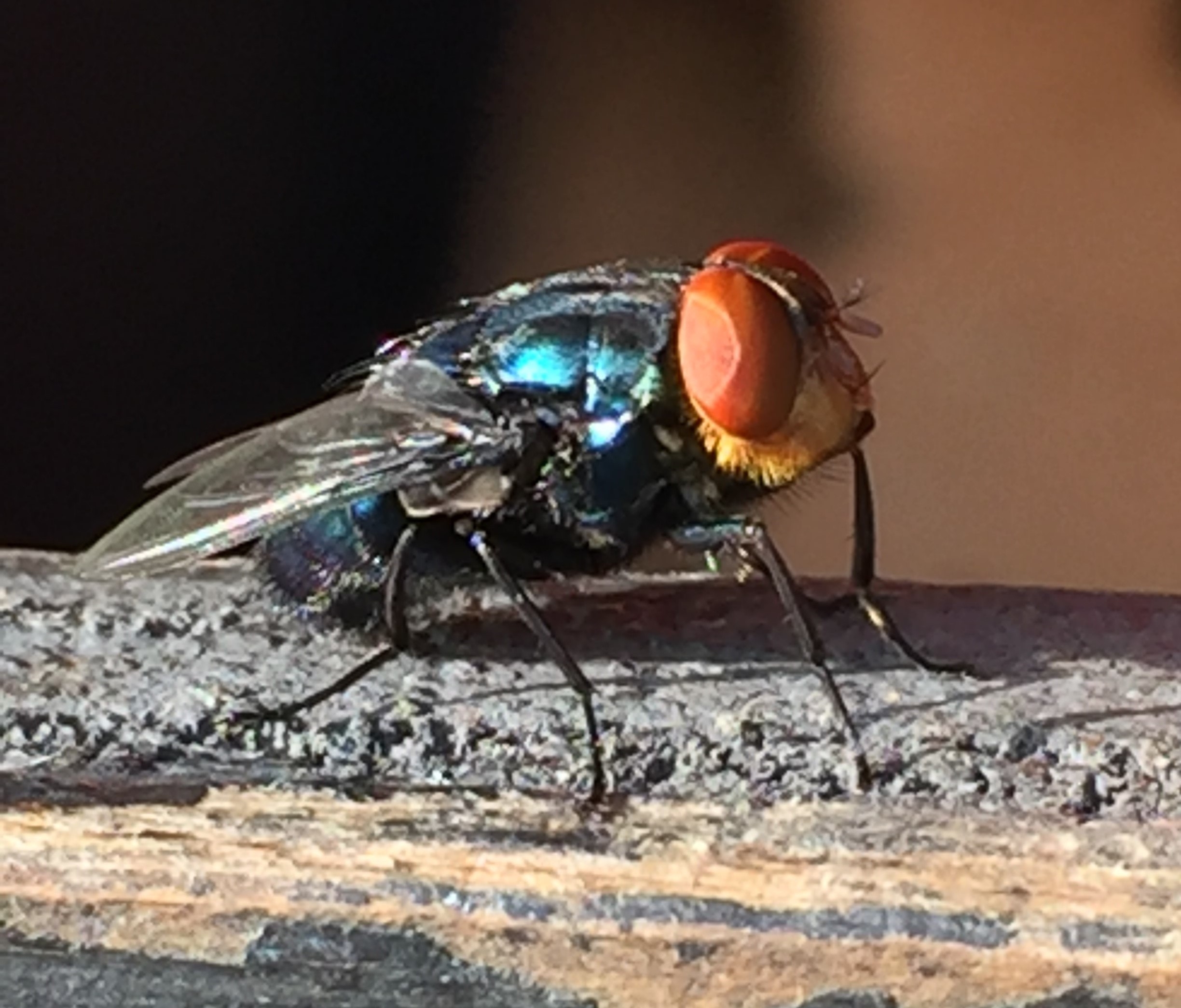
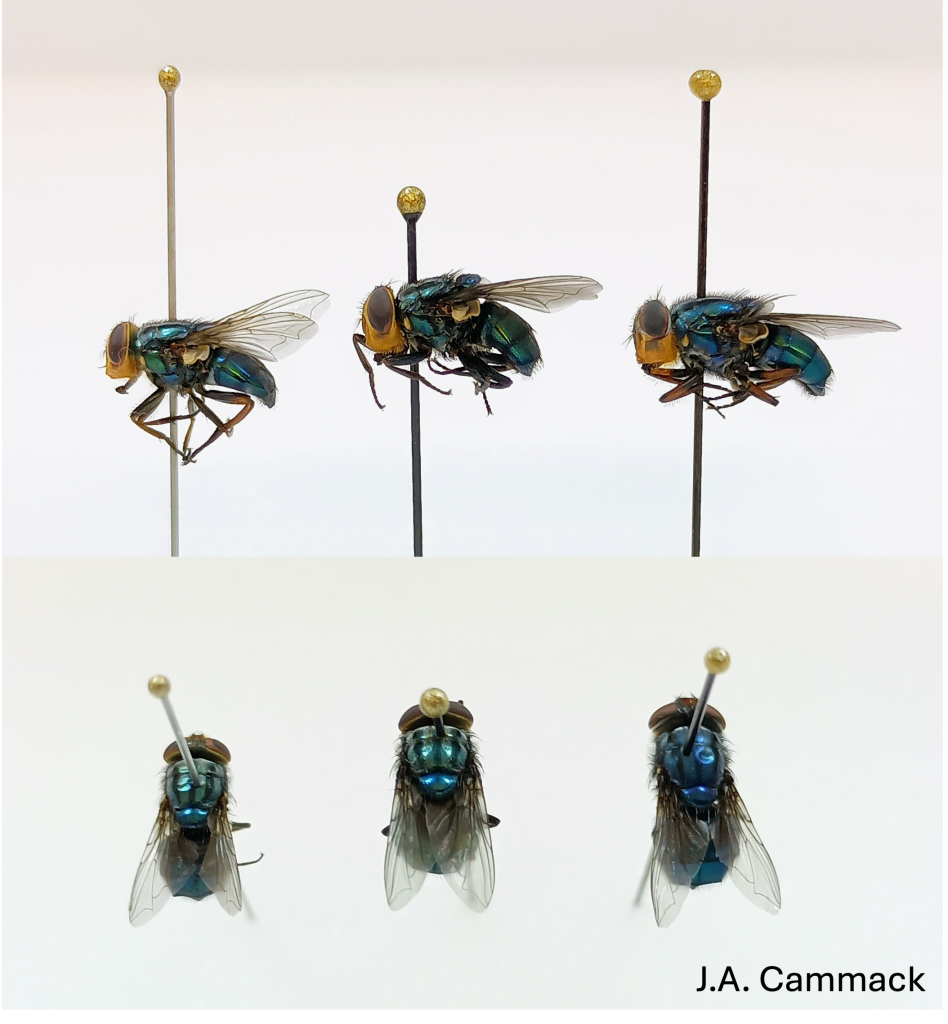
Cammack said one of the most common misconceptions involves the appearance of adult flies. They are slightly larger than a house fly, with metallic blue or green bodies, three dark stripes along their backs, and reddish-orange eyes. However, that is also the general description of multiple other fly species in the United States.
“There are a bunch of metallic green and greenish-blue flies that are present in the environment,” he said. “Putting out an All-Points Bulletin for metallic green flies is not going to do anybody any good.”
Examples of three fly species that look like the NWS are the green bottle fly, common blowfly and secondary screwworm. These flies all have blue green bodies and orange or red eyes; but the major difference is that they do not eat the living flesh of their host.
Cammack said many flies that look similar to NWS are harmless or even beneficial to agriculture. Some metallic green flies commonly seen around livestock feed only on manure and have no direct impact on animals.
Positive identification of NWS requires laboratory analysis. These flies look so similar to other commonly found flies in the High Plains that they must be placed under a microscope and examined to determine if they are NWS.
Cammack said the National Veterinary Services Laboratories in Ames, Iowa, is responsible for confirming NWS cases in the U.S. However, Cammack said personnel have been stationed in Kerrville, Texas, to speed up the process of identifying cases in Texas.
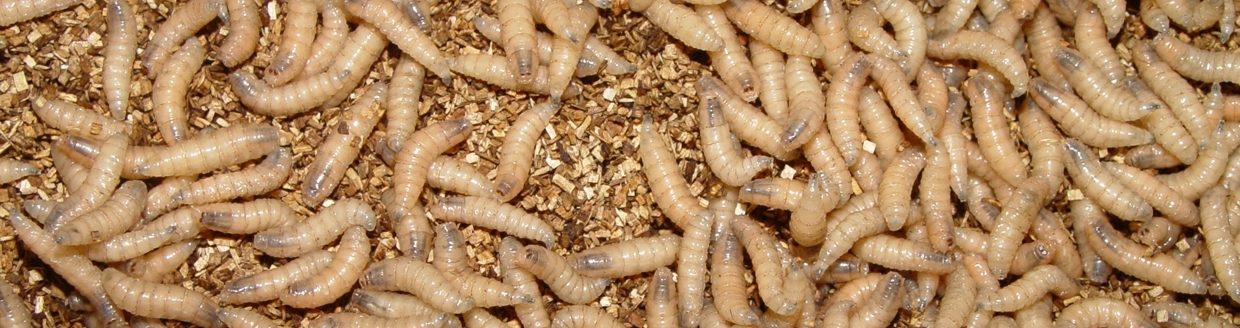
The larvae also look similar to other fly larvae, with some minute difference that may or may not be visible to the naked eye, he said.
“NWS larvae have some well-developed rings of spines that go all the way around most of their body segments, and they have those spines because they are parasites,” Cammack explained. “These morphological adaptations help them stay in or on whatever host they’re feeding on.”
Cammack said another characteristic that is not always visible is the presence of darkly pigmented tracheal trunks located at the rear portion of the larva body.
NWS misconceptions
Cammack said some false information has been spread and has resulted in confusion surrounding the NWS name. He said it is not a new insect, but the same species livestock producers battled and eradicated in the U.S. during the 1950s, 1960s and 1970s.
He said the term “New World screwworm” was adopted after the species appeared in Libya during the 1980s. Because a different screwworm species already existed in Africa, the two were distinguished as Old World screwworm and New World screwworm based on their geographic origins.
He also addressed concerns of NWS in humans. While human infestations are possible, Cammack said people have an advantage because they can clean and cover wounds, reducing opportunities for infestation.
Cammack also emphasized that NWS is not a food safety issue, but rather an animal mortality concern. Animals that are treated and recover from NWS infection can lead normal lives and be slaughtered without any food safety risks.
“The food supply is safe,” he said. “It’s not a contagious disease. The larvae don’t just spread from one animal to another. An animal must have either an open wound that’s infected or a natural body opening that has a bacterial infection that stimulates those adult female flies to lay eggs around it. It’s not like a virus that’s spread when an animal sneezes or something. There must be a very specific set of conditions to allow an infestation to occur.”
Prevention over panic
Since NWS was confirmed in the U.S. in early June, there has been increased anxiety on the part of livestock owners. Some have tried to identify NWS themselves and spread false information on social media platforms that only muddies the water surrounding the NWS topic. Cammack hopes additional education around NWS can quiet concerns and prevent the spread of this pest.
“I think there’s probably been a little panic, but what I hope is coming from it is increased awareness,” he said.
For producers, monitoring livestock remains the most effective tool. Cammack recommends inspecting livestock frequently, ideally daily when possible, and treating wounds promptly. Open wounds ranging from barbed-wire cuts to insect bites can provide opportunities for infestation if they become infected.
“In the span of a week from the time that a wound happens, we could have those larvae completing their development and then dropping off to burrow down in the soil to pupate,” he said. “That’s why we tell producers that they need to check their animals as frequently as possible because that could potentially catch a wound, maybe before it gets infested, or catch an infestation before the larvae complete their development.”
Special attention should be given to young animals, particularly newborns, Cammack said. Healing umbilical cords can serve as attractive sites for egg-laying flies. He encouraged producers who find wounds containing fly larvae to contact their veterinarian or local Extension office.
Cammack said adult NWS flies typically travel about 5 to 10 miles on their own, although weather conditions can carry them farther. Limiting animal movements in areas where cases have been confirmed is an important step in slowing the spread.
“Livestock production is a lot different than it was 50 to 75 years ago, when we were previously dealing with screwworms,” Cammack explained. “Some of the biggest movements of these pests in Mexico, for example, have been animals that came from screwworm positive areas that got loaded into a trailer and taken to feedlots in northern Mexico. These animals were moved hundreds of miles in a day but should never have been moved in the first place. That’s what we want to avoid here in the U.S.”
As officials continue monitoring the NWS’s northern expansion, Cammack said producer awareness remains one of the most important defenses.
“If you see something that’s out of place, report it. We would rather receive reports of cases that turn out to not be screwworm than for somebody to just assume it’s not and not report.”
Lacey Vilhauer can be reached at 620-227-1871 or [email protected].