
Starting an important conversation
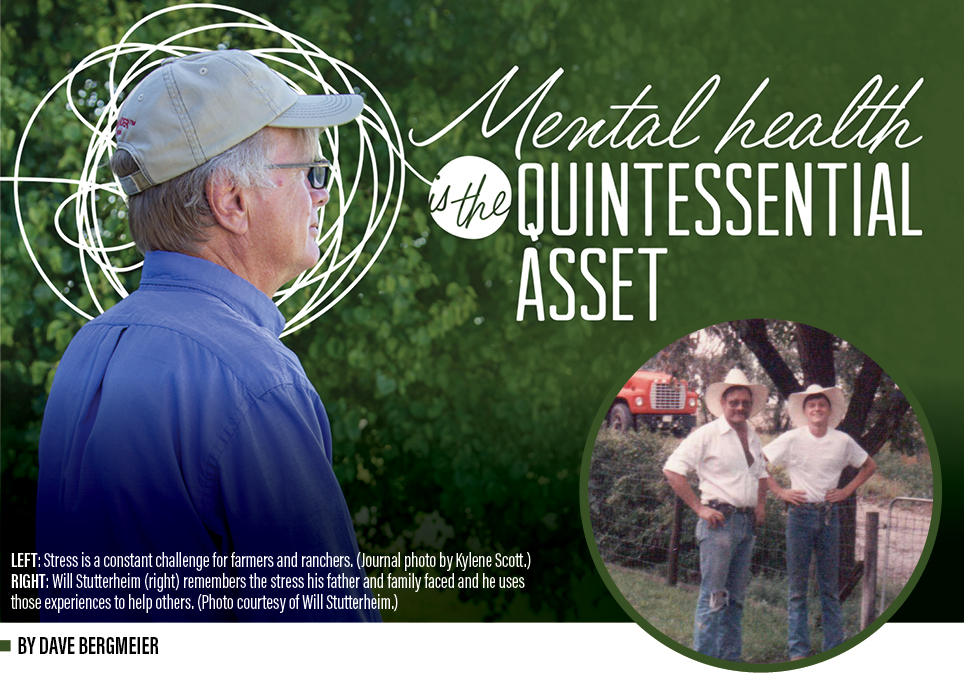
Addressing mental health needs in rural communities continues to be a focus of experts, including one who puts farmers and ranchers at the top of his list.
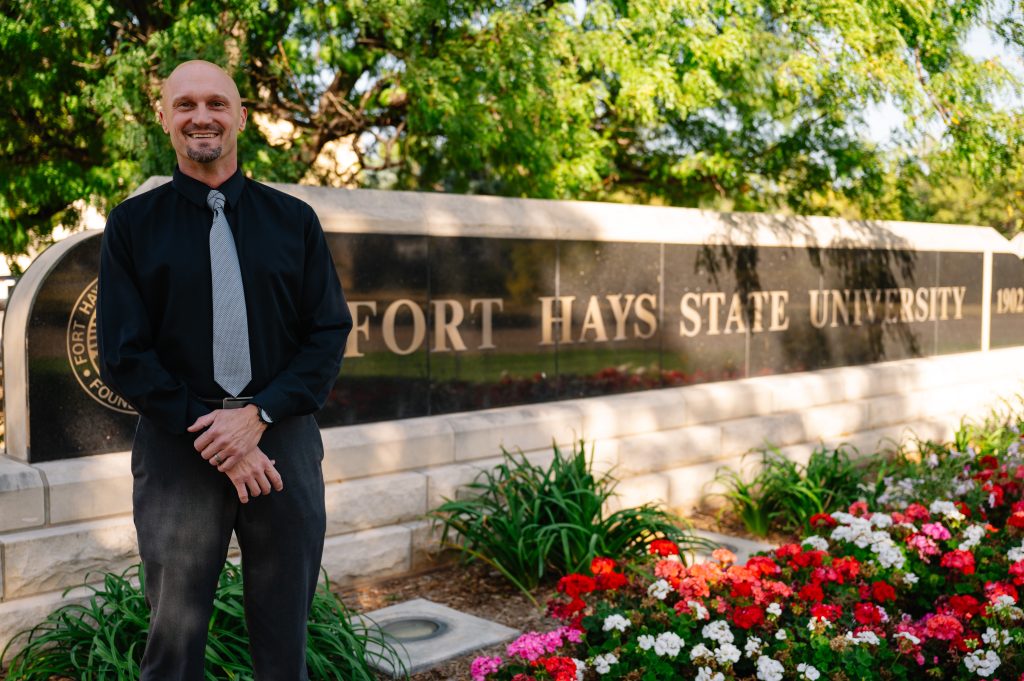
Will Stutterheim, instructor and undergraduate apprenticeship coordinator with Fort Hays State University, grew up on a family farm in Prairie View in northwest Kansas where he witnessed first-hand the challenges farmers and ranchers face as his family fought to keep the farm going.
Stutterheim remembers his time on the farm, “Too much time to think and not a lot of interaction.”
Agriculture is a unique industry, he said.
“Stress underlies mental health,” Stutterheim said. “Farmers and ranchers have a stressful job. They have a lot of tasks to get done in a hurry. Then there is the price they receive for what they produce, which is never enough, and then there are input prices they pay for, which right now are too high, and every farmer and rancher is affected by the stress.”
Farmers and ranchers have a stressful occupation and the statistics don’t lie. The suicide rate is 3.5 times higher than the greater population. Accidents and substance abuse are also higher than the general population.
“These are people out on an island,” Stutterheim said, citing many hours doing chores with little or no interaction with others. As result they are four times more likely to experience depression than the general population.
The prevalence of alcohol abuse among farmers was 32% (11% in the general population), he said.
Other findings by experts
- Stigma—nearly two in five rural adults say their family members (36%) and people in their local community (38%) attach at least a fair amount of stigma as a barrier to seeking treatment or help for mental health.
- In addition to acute injuries, and the effects of aging and chronic pain are also prevalent among farm workers due to common repetitive motions, kneeling, and carrying heavy loads.
- 74% of farmers or farm workers are or have been impacted by opioid misuse.
- Agriculture is in the top 10 for civilian occupations with high fatal work injury rates.
- Women farmers are four times more likely to experience depression.
- As many as 65% of nonmetropolitan counties do not have psychiatrists, and over 60% of rural Americans live in designated mental health provider shortage areas.
Symptoms and signs of mental health problems can take several forms, Stutterheim said. They can include a change in routine or social activities, a decline in the care of domestic animals, an increase in illness or other chronic conditions, an increase in farm accidents, a decline in the appearance of a farmstead, decreased interest in activities or events, and signs of stress in children that can include struggles with school.
Stutterheim said it is important to have context in observations. Like their urban cousins, farmers and ranchers can have a bad stretch for several days or a week, but if their struggles linger four to six weeks that is when it can become visibly concerning to family and friends.
An affected person who may have mental struggles may show signs of irritability or appear to have a down outlook, struggle to concentrate, and experience forgetfulness beyond the norm, he said.
“Sleep patterns tell a lot,” Stutterheim said. “Have they slept well or have insomnia. Are they stress eating?”
He also said men may show signs of irritability or short fuses with their temper. They also may feel an uneasiness about being approached because of the stigmas, he said. Stutterheim offered candid advice. “’I’m fine’ is not an acceptable answer.”
Static stress arises from difficulties that happen slowly and that remain constant over time. Static stress is a longtime fixture in production agriculture because variables create the thinking, “Life is beating up on me.” Over time the stressors can accumulate and those can include physical challenges.
Sometimes that is why stories occur about depression and suicide from what appears to be successful farmers and ranchers.
Dynamic stress results from stressors that change rapidly, often times overwhelming our ability to adjust and potentially causing greater stress. Dynamic stress occurs from other stressors like the need to sell land to relieve debt, off-the-farm job stress, or if the loved one experienced a fire on their property or is in a long-term drought pattern that can rob optimism and hope.
“If I had a golden rule, I’d keep checking on everybody particularly in those mentioned situations,” Stutterheim said. “You don’t know who is struggling until you ask. Keep asking and checking on people.”
Good news
The stigma long associated with admitting to mental health problems is a sign of weakness has significantly lessened over time, he said.
“I do firmly believe in the past 20 years we have made significant gains in terms of conversations and mental health resources,” Stutterheim said. “We have a long ways to go. But I am optimistic. If the progress we’ve seen over the past 20 years is any indication, then I can’t wait to see what the progress will be over the next 20 years.”
How to help
If someone is concerned about a family member, his advice is to have a well thought out plan, so he or she is comfortable with an informal intervention. Communicate your plan with other family members or close friends who are allies so everyone is on the same page.
Try to avoid having an intervention with the loved one during the holiday season, unless it is the only time available.
Visiting with the person of concern when both have some space to be comfortable is crucial, he said. An informal conversation is a good starting point, he added.
“Maybe start with what did you think of the Chiefs game, or the weather if it is snowy or icy in the winter, or in the summer say, ‘darn it is hot outside.’”
Finding a light way to engage in conversation shows genuine interest and ensuing conservations can build on each other, Stutterheim said. The ultimate goal is to have the person understand people care about them and encourage them to get help.
Stutterheim said it is important for those who are trying to help to be patient.
“I use Will’s rule. You are going to have conversations five times before someone opens up. Rarely does anyone open up the first time. It usually takes about five times over the course of time,” he said. “Plant the seed and keep watering.”
Encouraging the loved one to see his or her family physician can be valuable advice. Many of today’s doctors are aware of the need and provide guidance in a confidential manner that farmers and ranchers seek.
Stutterheim said farmers and ranchers are the backbone of the High Plains.
“I have so much appreciation for the people who are farming and ranching as they are feeding the world. They deserve our support. We should work hard at all levels to make sure they are taken care of. They are real people who need are support and deserve our thanks.”
Resources
• 988 Suicide and Crisis Lifeline
• Kansas AgStress Resources https://www.kansasagstress.org/
• American Farm Bureau State of Mind https://www.fb.org/initiative/farm-state-of-mind
• Sober Cowboy (for substance abuse) https://www.sobercowboy.org/
Dave Bergmeier can be reached at 620-227-1822 or [email protected].



