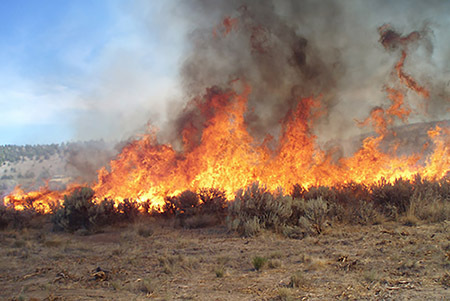
Center helps ranchers with their grazing lands
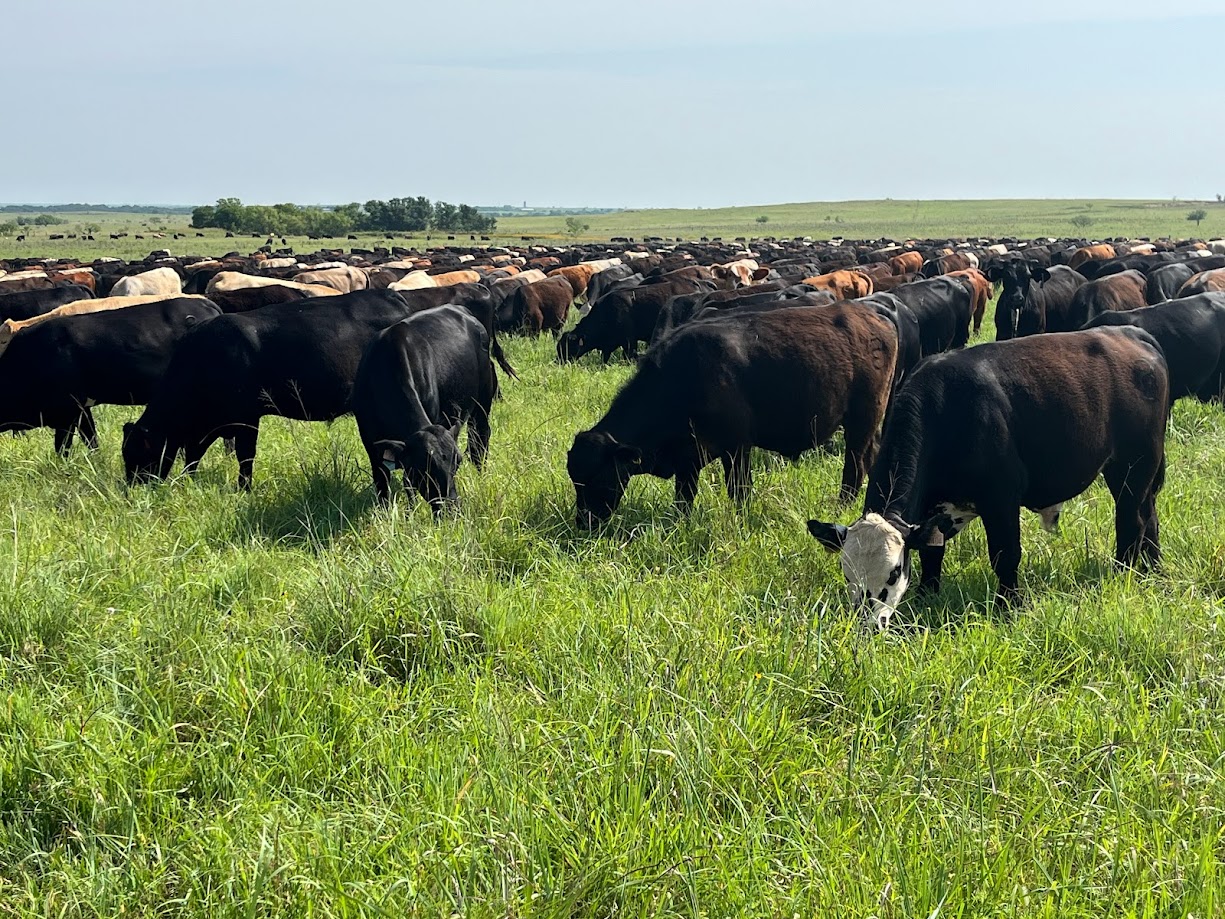
Rebuilding the nation’s cowherd is not an easy fix.
Besides heifer retention, interest rates and input costs, there is another question ranchers know well: When will drought conditions ease in the High Plains so they can have confidence in expanding their operation?
Bob McCan, a rancher from Victoria, Texas, who oversees the cattle operations and recreational hunting and wildlife operations for his family’s company, McFaddin Enterprises Ltd., said most problems with range management and native range production is tied to extended drought periods.
It has been a focus on managing resources tighter and reducing and eradicating invasive species that can rob forage potential, he said.
“Sometimes there is not a lot you can do, but if you know the causes you can do better,” he said.
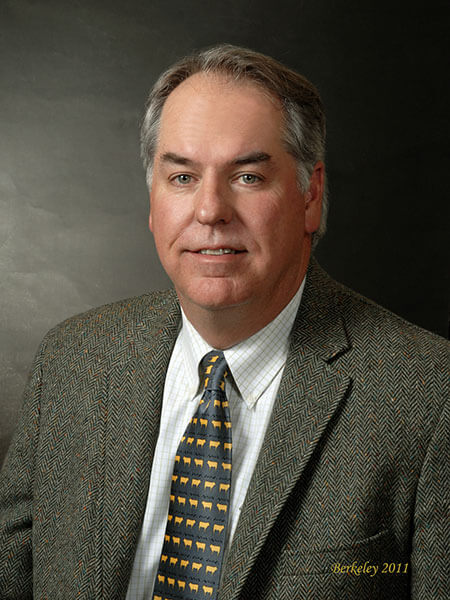
Jeff Goodwin, director of the Center for Grazinglands and Ranch Management within the Department of Rangeland, Wildlife and Fisheries Management at Texas A&M University, said one of the most common—and important—questions he receives is about stretching existing land resources, particularly during a drought. (Top photo courtesy of Center for Grazinglands and Ranch Management.)
A rancher cannot predict weather or drought patterns, Goodwin said, which means annually planning for drought is essential.
“I’m one of those that I’m going to believe it when I see it,” he said when he hears reports that a drought is about to end. “Because hope is not a very good drought management plan.”
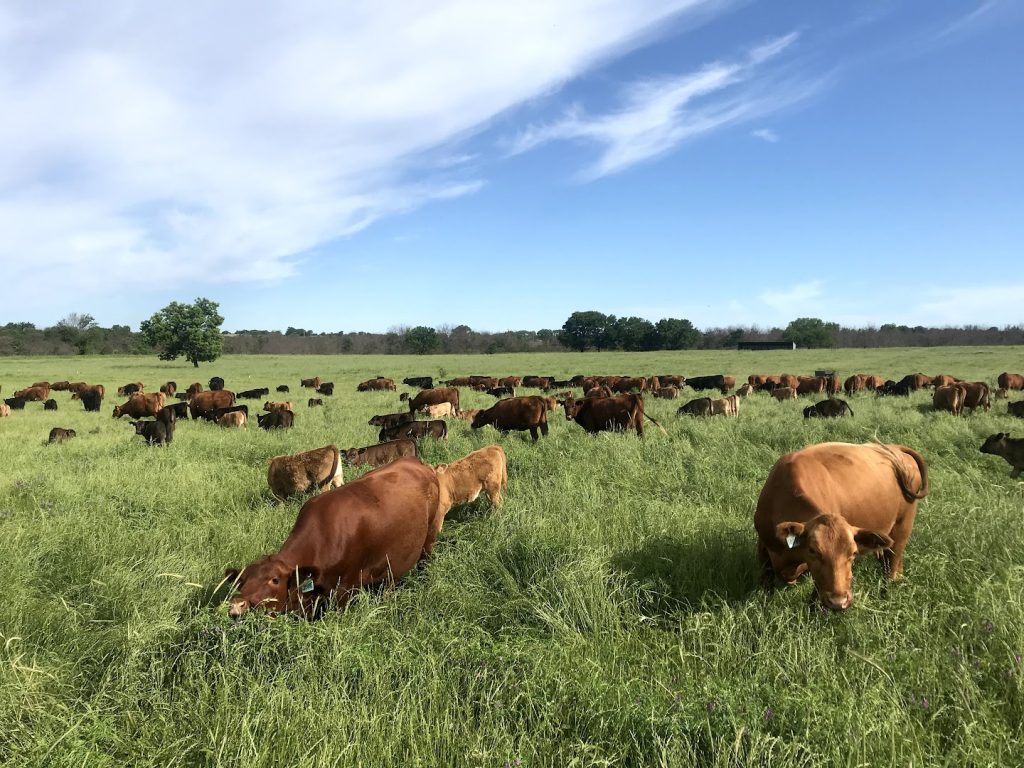
If a grower has an opportunity to grow more grass on the rangeland he owns or rents, that can help. Combined with an adaptive grazing strategy, as shown through research and trials, a proactive approach provides more forage and enhances decision-making.
By focusing on how a rancher allocates forage resources, he can put together a grazing management plan that can positively affect carrying capacity over time, Goodwin said.
McCan said the center has been a good resource for producers because it looks not just at grazing, but also invasive species control.
Knowledge is essential
Goodwin said ranchers who are willing to learn from other ranchers can help bridge the information gap. That can include reaching out in the local ranching community to find another producer who has a similar-size herd and a good rangeland management system.
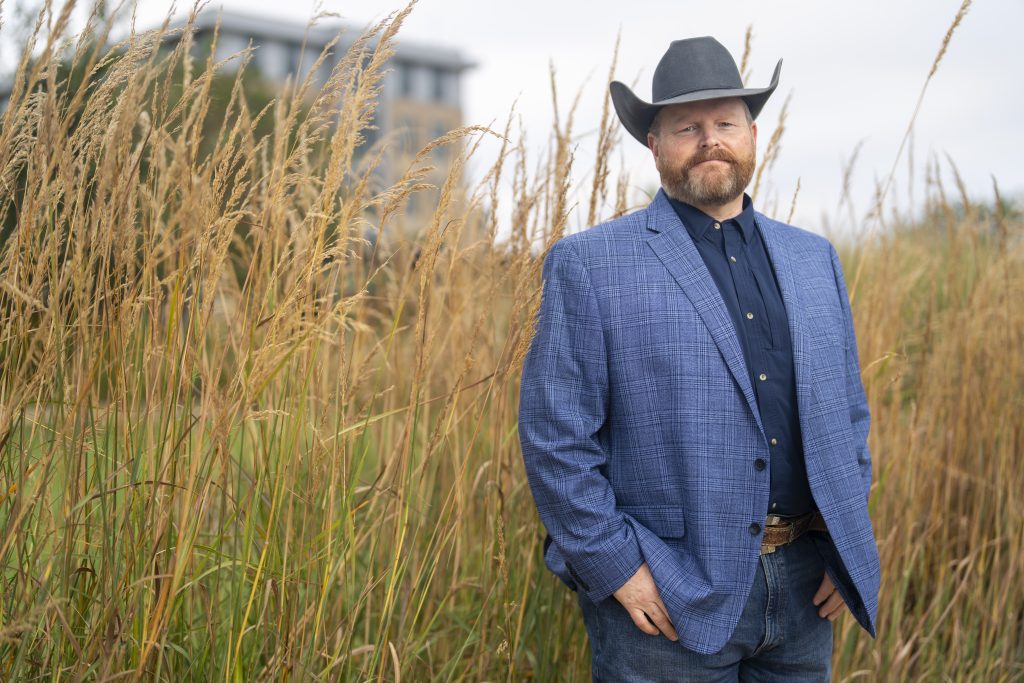
“I think that’s the most productive way of learning because you’re learning from someone who has faced similar challenges,” he said, adding he also encourages ranchers to look at resources available from land-grant universities and tap into county agents or specialists in their state systems.
Many High Plains states have grazing land coalitions, he said. The National Grazing Lands Coalition (www.grazinglands.org) has state affiliates, and those organizations can put together peer groups to help operations at the rancher-to-rancher level.
Another outlet is Noble Research Institute (www.noble.org), he said, because it has excellent outreach and educational opportunities in the regenerative grazing management sector. Plus, Noble has an understanding of soil health dynamics, and employees recognize that ranchers have to be profitable.
McCan said the center can help producers of all sizes, which he credits Goodwin and the center’s staff for taking that message out to ranchers. The message includes core production and management techniques that have included the importance of resting pastures so they can recharge.
At his ranch, he puts his pastures in a rotational plan.
“We like to have them have 90 days rest as a minimum. Some years it is easy to do and some years it is more difficult,” McCan said. “We feel like if we can do that, we’re staying up a little bit ahead of the game and some of the problems that can be caused by drought, or sometimes in our case, floods.”
The key, he said, to grazing land management is to constantly adapt to conditions that McCan says he often has little control over. That is why research from the center is important because it can help formulate a stocking rate plan. Years ago, the mindset was the more cows the better, but with new research and tools, ranchers do a better job of utilizing forage production.
Goodwin believes it is important for ranchers to have a grazing management mindset equal to that of their crop-producing peers.
“At the end of the day, ranchers are business owners, and their greatest asset outside of their family is their land,” Goodwin said. “Their land is the profit generation center for the enterprise, and its health largely governs the efficiency.”
When he asks a producer what he thinks his job is, the response is often, “I’m a rancher.” Goodwin responds, “But you’re more than that, you’re creating natural capital.”
Goodwin admires ranchers because, from an investment perspective, they are ecosystem asset managers. They are managing a natural capital asset that creates value by producing forage that can be consumed by a beef animal.
This also gives them an opportunity to address soil carbon, clean water, clean air, and open space, and collectively support ecosystems that benefit people living in cities.
Finding your way
Goodwin said when presented in those terms, ranch managers learn that simply turning out a set of cattle in a pasture and forgetting about them is not efficient.
“We can’t control how much rain we get, but we can control how much moisture we keep,” he said. “How we manage the landscape influences our efficiency. These are two things that are going to drive most of our productivity from a forage production perspective in capturing sunlight and converting that into a forage resource.”
If a producer can determine a path toward greater efficiency, it means long-term benefits.
“As we increase organic matter, we increase infiltration, and we increase aggregate stability, which not only allows more water to infiltrate faster, but it also holds water longer when we’re in drier periods,” Goodwin said. “By managing the efficiency of conversion of that energy production and managing that above-ground resource, we’re also taking care of the below-ground resource.”
Without a balanced system, leaves are not healthy and are inefficient.
“Figuring out a grazing management strategy that optimizes three things we want—production, profit and well-being—the goal should be to optimize all three of them.”
Practical approach
One measure of success is to think about a formula where the ranch is striving to increase the beef produced per acre instead of relying on traditional metrics, he said.
For many years, ranchers often used weaning weights as the definition of success and strived to increase those weights, Goodwin said.
“How long have we used weaning weights as our guide? That’s what we talk about in the coffee shop with our friends and say, ‘Hey, my calves were 10 pounds heavier this year,’” Goodwin said. “Your cows are also bigger, too. As an industry, we’re really efficient because we’ve got bigger cows producing more beef individually than we used to. Our beef productivity as a nation is still really good, but our herd dynamic is low because we’ve got fewer cows, but they’re bigger and producing a margin.”
However, there is an important tradeoff, he said, with those larger calves and cows.
“When you look at the dynamic of the economics at the ranch and allocating that forage resource, that bigger cow, that 1,600-pound cow, is going to eat more than a 1,100-pound cow, and she’s not always efficiently weaning 50% of her body weight,” Goodwin said.
With available forage resources, a rancher might want to consider a smaller-frame cow. With more cows, they will eat less per head and the rancher will have more calves.
More calves can mean more beef produced per acre, and the rancher may have an opportunity to lower input costs per head, resulting in a lower break-even point, he said. Goodwin said such costs are critical, particularly for smaller ranchers or beginning ranchers.
In multiyear drought-stricken areas, he encourages ranchers to stay conservative in their management approach because while the market may signal expansion, they also need forage supplies to maximize the opportunity.
Dave Bergmeier can be reached at 620-227-1822 or [email protected].
Ranchers at heart
By Dave Bergmeier
The Center for Grazinglands and Ranch Management, based at Texas A&M University, traces its roots to the 1990s, but it was revitalized in 2021 as the university and ranchers recognized its importance.
Bob McCan, a rancher from Victoria, Texas, who oversees the cattle operations and recreational hunting and wildlife operations for his family’s company, McFaddin Enterprises Ltd., has a degree from Texas A&M and in the 1990s said the concept for the program was good, but it did not have the funding and priority it needed to be successful.
McCan said the program needed to be relevant for ranchers with up-to-date research and how they can apply new technology. In 2021, ranchers were asking many questions about carbon markets, as an example, they also understood the how soil management and soil improvement can make a difference.
“There was a big need and renewed interest in range management and stewardship,” McCan said.
Also, ranching is a diverse industry. Most cattle operations across the country have about 40 head of cows and those operations are just as hungry for the latest information and the center can help them. All ranchers need good water and forages. It may take several years for a smaller operator to build a paddock system, but it is still doable.
McCan is thankful for Director Jeff Goodwin. The director has worked with ranchers and rangeland management for many years. Before returning as director five years ago, he worked for the U.S. Department of Agriculture’s Natural Resources Conservation Service for 14 years before taking a position with Noble Research Institute in Ardmore, Oklahoma, for six years.
At the Center for Grazinglands and Ranch Management, Goodwin has been able to tap into his background in resource management while continuing to work with ranch managers who depend on the ecosystem.
“The center focuses on research, outreach and education to help producers build resilience in their system,” Goodwin said. “We focus on grazing land ecology, land economics and ranch-relevant applied research.”
Much of the center’s work is intertwined with working ranches in Texas and across the country.
For more information about the Center for Grazinglands and Ranch Management, visit https://cgrm.tamu.edu/.
Dave Bergmeier can be reached at 620-227-1822 or [email protected].