Phased reopening of ports to Mexican beef cattle imports won’t do much to expand the herd in the United States, said James Mitchell, extension livestock economist for the University of Arkansas Division of Agriculture.
Following the reemergence of the New World Screwworm in Mexico, imports of cattle from Mexico were first halted in November 2024. Imports briefly resumed in 2025 from February to May but plans for reopening again in July 2025 were suspended. However, last month, the U.S. Department of Agriculture announced it would begin a phased reopening of land ports for cattle imports starting Aug. 24.
New World Screwworm is a parasitic fly whose larvae feeds on live tissue and can kill animals. Though a threat to animal health, the fly is not a threat to food safety.
USDA said the Douglas, Arizona, port of entry for cattle would open first, while the agency simultaneously initiated steps toward the reopening of two New Mexico ports at Santa Teresa and Columbus. No plans had yet been announced for the Texas ports at Del Rio and Laredo as of Aug. 18.
USDA noted the timeline will remain flexible, and reopening could be paused due to increased NWS risk.
“In the short term, this doesn’t mean much at all,” Mitchell said. “It’s going to be a slow process. Those cattle will trickle in. Markets had a strong reaction to the announcement but it does not change much for short term supply and demand fundamentals.”
Mexican cattle likely accounted for roughly 5 percent of U.S. feedlot placements before the closure and the ban especially tightened feeder supplies in the Southern Plains.
Despite being closed for more than a year, “there isn’t some massive backlog of cattle sitting at the border,” he said. “All those cattle that would’ve been imported going back to the fall of 2024 have been processed.”
However, the reopening “does have implications farther out in the fall and next year,” he said. “Mexican feeder cattle imports are a significant share of total U.S. feeder cattle supplies in a normal year. Will those cattle numbers come back and be comparable to pre-closure levels? I don’t think we’ll see that.
“Before the border closing, it was a very well-integrated industry,” Mitchell said. “Mexico had made lots of investments in its cattle industry to have cattle that fit seamlessly into our beef supply chain in the U.S., and so we would import feeder cattle.”
“They would be fed in the U.S., processed into beef, and in some cases, sold back to Mexico,” he said.
According to USDA’s Foreign Agricultural Service, South Korea was the top export market for U.S. beef at $2.23 billion in 2025. Japan followed at $1.76 billion, with Mexico at $1.3 billion and Canada at $881.28 million.
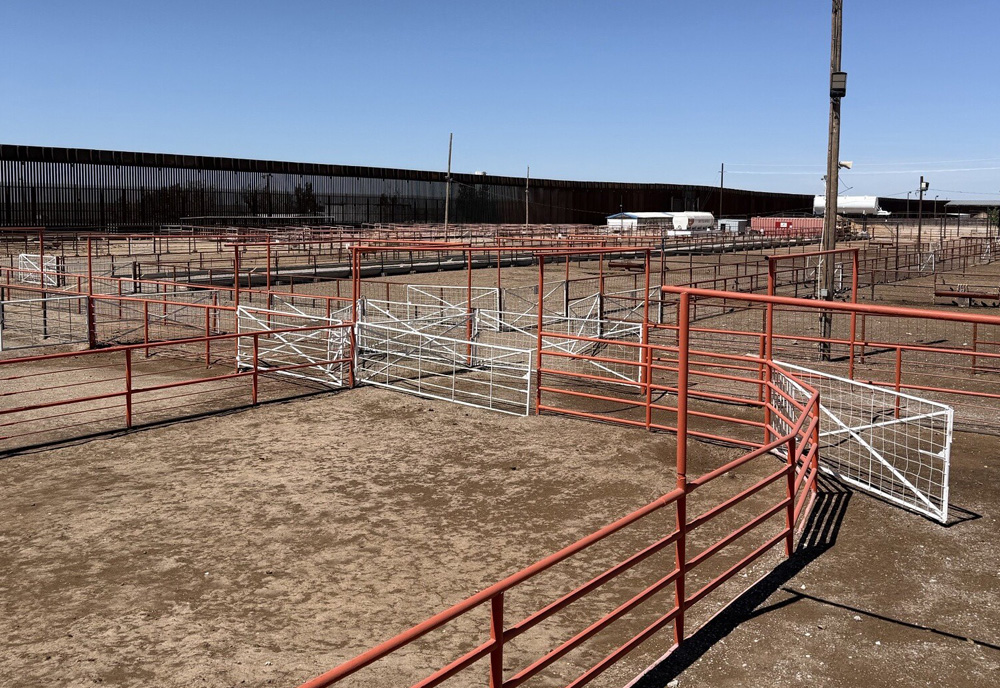
PHOTO: Image of the empty lots at Santa Teresa, New Mexico. The location is one of five border ports for livestock to come in to the US from Mexico. Its closure due to the threat of New World Screwworm has affected jobs there. Photo taken May 2026. (UADA photo by James Mitchell)