
When it comes to building a better herd, producers may be wondering if linebreeding strengthens genetics or creates more risk?
The beef cattle experts from Beef Cattle Institute at Kansas State University recently dove into that question, breaking down the science and uncertainty behind the practice, in a recent episode of the Cattle Chat podcast.
Linebreeding is a form of inbreeding in which animals that share a common ancestor but are not closely related are mated to maintain or concentrate desirable traits within a herd. While the practice can improve genetic consistency, it also increases the likelihood that both positive and negative traits will be expressed over time.
During the episode, the beef cattle experts emphasized that while linebreeding can be used strategically, it requires careful evaluation of risk and long-term herd goals.
K-State veterinarian Bob Larson encourages producers to focus on overall animal quality rather than closely related genetics.
“You’re better off picking outstanding adults that are not related,” Larson said. He added that predicting genetic outcomes can be difficult because traits may not consistently express across generations.
K-State beef cattle nutritionist Phillip Lancaster explained the concept through probability.
“It’s all probability,” he said. “The more you breed down the line, the higher the chance of doubling up on recessive traits.”
Recessive traits are genetic characteristics that only appear when an animal inherits two copies of the same gene, one from each parent. As linebreeding continues over generations, the probability of these “double recessive” pairings increases.
The experts noted that while this can lead to greater uniformity, it can also expose undesirable or harmful traits that might otherwise remain hidden.
The discussion highlighted the balance producers must consider when making breeding decisions. While linebreeding can help maintain desirable characteristics from influential animals, it also reduces genetic diversity and may increase the risk of genetic defects if not managed carefully.
Listeners can hear the full discussion, including additional insights on nutrition and current research, on the Beef Cattle Institute’s Cattle Chat podcast. Questions on this and other topics may be sent to [email protected].
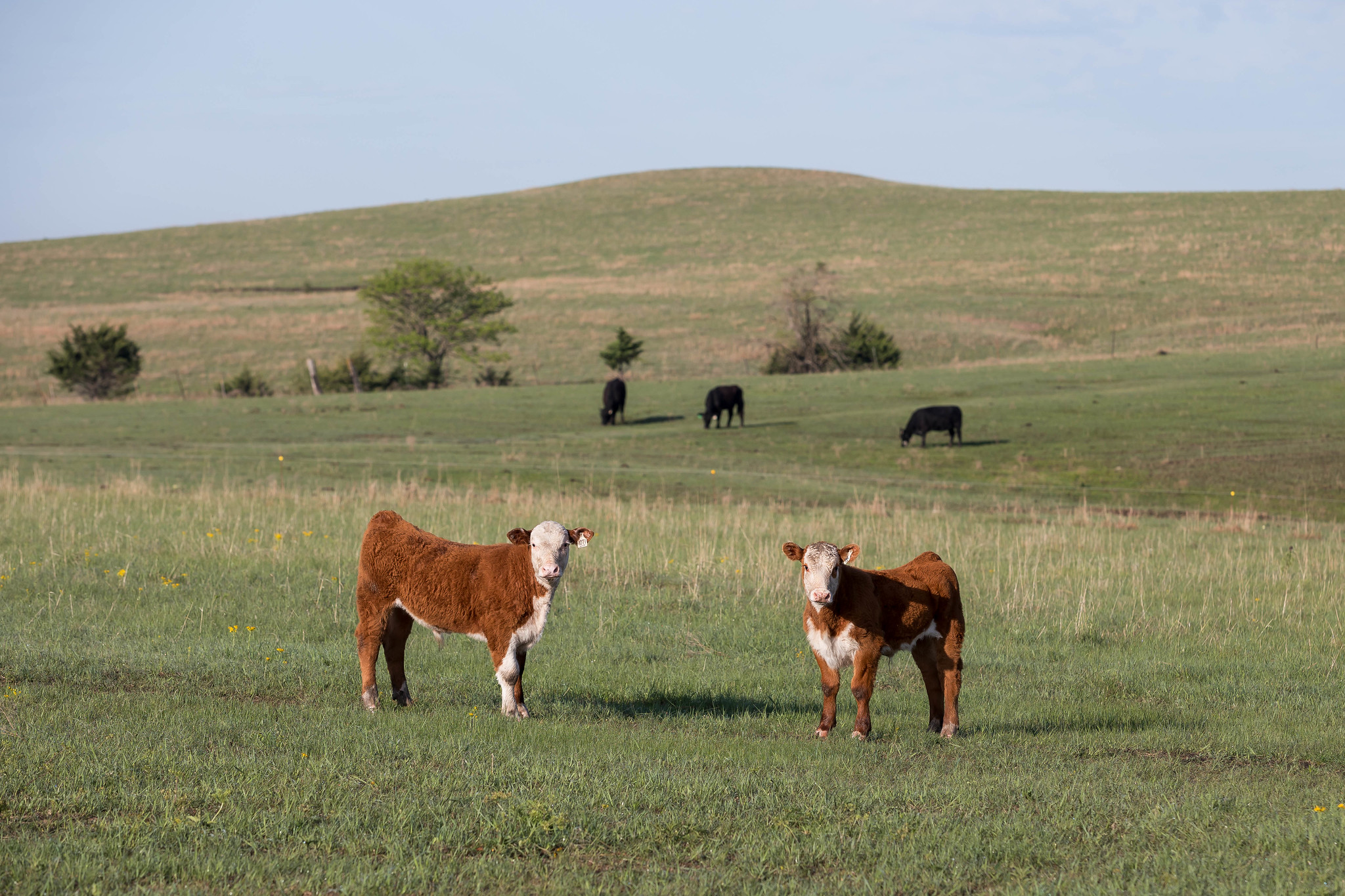
PHOTO: Hereford cows on grass. (K-State Research and Extension)



