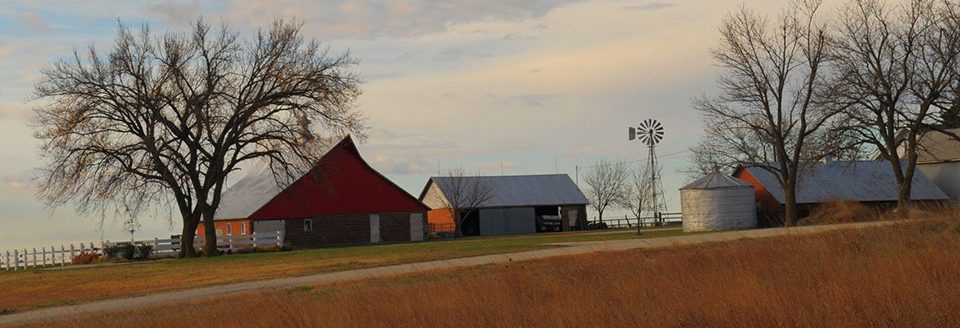
Farm economy follows several paths

The farm economy has been on separate paths, according to Seth Meyer; as crop producers have faced tight margins with low prices, their livestock counterparts have continued to see record prices.
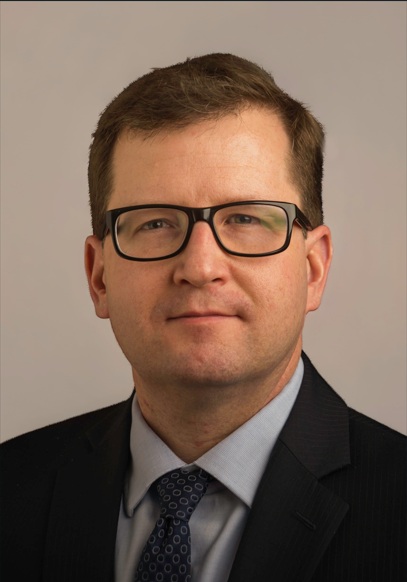
Meyer, the director of the Food and Agricultural Policy Research Institute at the University of Missouri, has had a unique perspective. Before joining FAPRI Jan. 1, he was chief economist with the U.S. Department of Agriculture.
The crops equation of the farm economy is poor, as he likened it to 2014 to 2019 when prices were depressed and margins were thin. Then crops picked up with good moisture, an easing of drought and market conditions that boosted farm income, particularly in the aftermath of Russia’s invasion of Ukraine in February 2022. In the past several years, farmers have felt the price squeeze of low prices and elevated input costs.
The livestock sector has experienced strong profitability, and the market continues to send a clear signal that it is likely to continue, he said. However, producers have experienced constraints because of dry conditions in key cattle states, and heifer retention has not had any measurable uptick.
The third part of the equation is ad hoc disaster assistance that has been important to the ag economy.
The USDA’s Farmer Bridge Assistance program provided $12 billion this winter for the 2025 crop year.
“If you stripped away cattle and ad hoc government payments, like farmer bridge assistance, overall farm income would look a lot worse,” he said.
Meyer has held various roles with USDA’s Office of the Chief Economist and FAPRI over the years, including head of the World Agricultural Outlook Board, publisher of the closely watched World Agricultural Supply and Demand Estimates report, and assistant director of FAPRI until rejoining USDA in 2021 to serve as chief economist. He received his doctorate in agricultural economics from Mizzou.
Meyer will be a keynote presenter at High Plains Journal’s Crops and Cattle Conference, Aug. 4 to 6, in Kansas City, Missouri. He expects some of those issues and challenges for farmers and ranchers to persist through the summer. He added there will be new developments, including crop conditions in the U.S. and globally, that he will be monitoring.
Meyer will also be tracking the global economy.
He does not focus on individual operations because each is managed differently, with expectations based on the manager, but he said there are factors to watch in the next two years.
“We’ve got a lot more global competition now and I think we’ve got a lot of threats to our competitiveness in certain sectors,” Meyer said. “What that means from a producer standpoint is the influences you face (now) is beyond domestic sources of influence.”
Grain producers will continue to face stiff competition from South America and other global countries, he said.
“You’re going to have to be on top of your game more than ever going forward,” he said.
Livestock producers could also face volatility, most notably as they work to expand the nation’s cowherd, which is at a historically low level. The nation’s beef cowherd is less than 28 million head.
“You’ve got some things overhanging the industry, like drought and uncertainty about the return of live animal trade with Mexico,” he said. “I like to see an opportunity for them to continue to profit in an environment where they can return us back and make a positive turn in the cattle (production) cycle.”
Meyer also noted that swine and poultry industries have seen some positive signs in the past year. Poultry, egg markets and dairy industries have been hurt the past two years by highly pathogenic avian influenza. On Feb. 2, 2025, eggs soared to $8.53 per dozen because of avian flu, he said, showing what can happen with volatility.
Meyer has watched enough upswings and downturns that his advice to farmers and ranchers is to always be aware of their costs and margins. They have dealt with drought for crops and forage, the Great Recession of 2007-2009, China’s on-again, off-again purchases of soybeans and pork, COVID-19, Russia’s invasion of Ukraine and now the Iran war.
“There’s not any short-run silver bullet,” Meyer said. “Folks will float policy options in order to support underlying demand and engage in trade agreements. These are all good, but there is nothing that all of a sudden injects profitability.”
Mother Nature—as she always is—remains an unpredictable wildcard for the global marketplace, he said.
For more information on the Crops and Cattle event, visit cropsandcattle.com.
Dave Bergmeier can be reached at 620-227-1822 or [email protected].