Officials break ground on new Texas sterile fly production facility
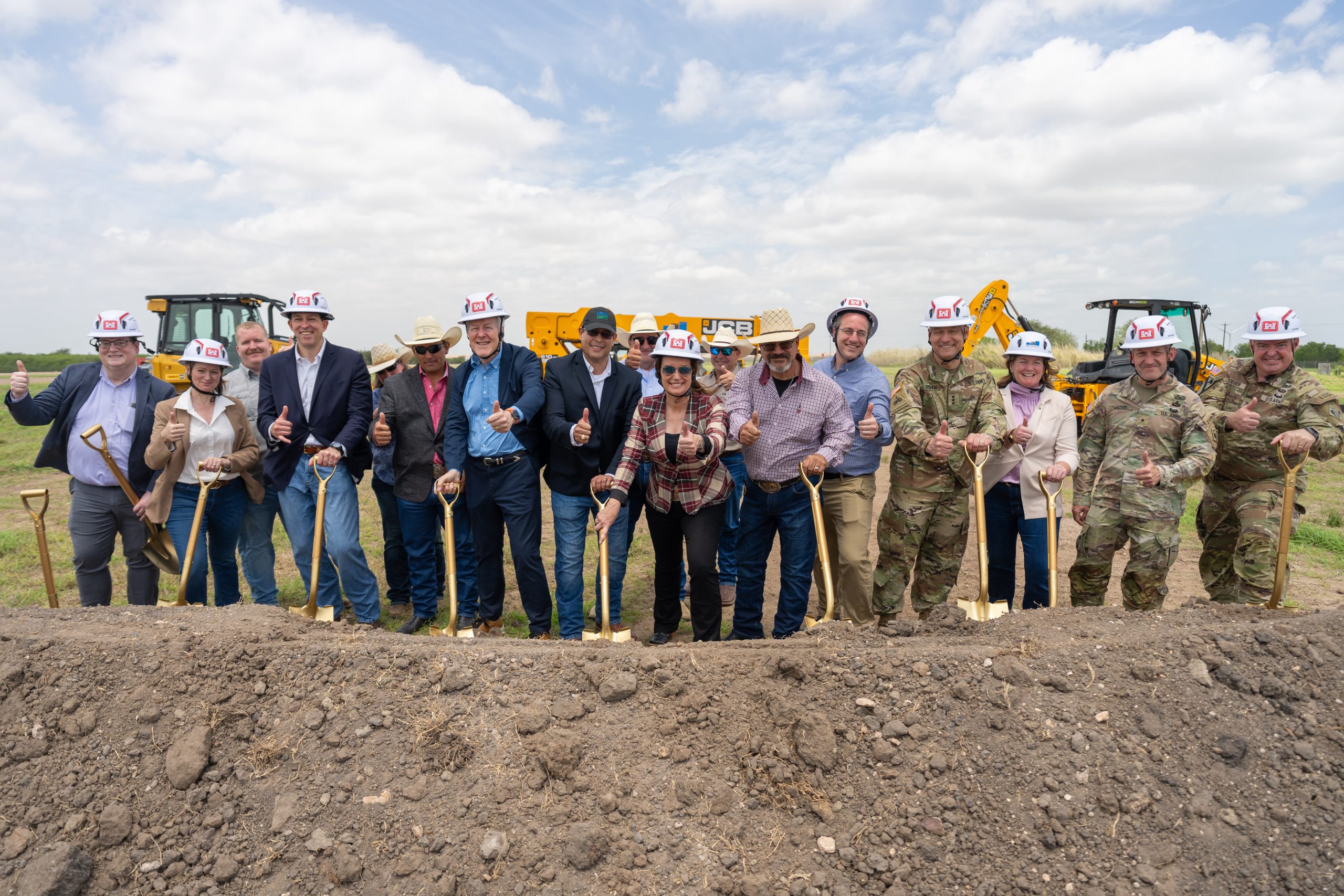
In an effort to become more prepared for the protection of United States livestock production, officials broke ground April 17 on a new sterile fly production facility at Moore Air Base in Edinburg, Texas.
According to a U.S. Department of Agriculture news release, USDA is partnering with the U.S. Army Corps of Engineers to construct the facility—which is the cornerstone of Secretary of Agriculture Brooke Rollins’ five-pronged strategy to combat New World screwworm. This expansion will help the nation’s domestic capacity to protect livestock, wildlife and public health from the NWS.
Rollins said the event marked a major investment in safeguarding America’s livestock and the producers who feed the nation.
“This puts NWS sterile fly production in American hands, so we do not have to rely on other countries for the best offensive measure to push screwworm away from our borders,” Rollins said. “The New World screwworm threatens the health of our herds, the stability of rural economies, and the resilience of our supply chain.”
Rollins said the president and his cabinet are committed to leveraging every resource necessary to contain NWS and protect American agriculture and ensure the long-term security of the food supply chain.
Lt. Gen. William H. “Butch” Graham, U.S. Army Corps of Engineers commanding general, said the mission at USACE is to deliver engineering solutions and with partners secure the nation, strengthen the economy and reduce disaster risk.
“That’s why we’re proud to deliver an engineering solution to the New World screwworm, which represents a direct threat to our nation’s livestock, our food security, and our economy,” Graham said. “This new, modern facility is the critical infrastructure we need to secure a defensive line against the New World screwworm for generations to come.”
The partners hope to build a modern, resilient capability at home, and one designed to safeguard U.S. agriculture by countering the threat with speed, scale and scientific precision.
According to the news release, USACE is providing engineering, design, construction management, and contract oversight for the project, ensuring the facility meets the highest standards for biosecurity, reliability and long‑term operational readiness.
The new facility is being built with an aggressive timeline designed to quickly expand the nation’s sterile fly production capacity. Initial operation capability is targeted for November 2027, reaching 100 million sterile flies per week. Construction continues immediately beyond initial operations to scale full production capacity to 300 million sterile flies per week.
This aggressive schedule reflects USDA’s commitment to protecting America’s producers, the agency said. A sterile fly production facility plays a crucial role in NWS prevention and response.
In a biosecure environment, NWS flies are raised and sterilized using irradiation before being released in targeted areas. Because female screwworm flies mate only once, mating with sterile males results in eggs that do not hatch. Sterile insect technique, paired with surveillance, animal movement restrictions, and education and outreach, has been the foundation of successful screwworm eradication efforts for decades.
This new state-of-the-art facility will complement USDA’s ongoing production of 100 million sterile flies per week at the Panama-based COPEG facility. USDA has also invested $21 million to support modernization of Mexico’s Metapa, Mexico facility, expected to be operational in summer 2026.
Once fully operational, this expanded production network will provide the speed, scale, and domestic capability needed to rapidly counter any NWS threat—reducing risks to producers, protecting animal health, and strengthening the resilience of America’s livestock industry.
Texas ranks first in the nation in cattle production, and Texas ranchers and farmers are first in line for support and protection from NWS.
U.S. Rep. Monica De La Cruz said the groundbreaking is a historic moment for south Texas, and the $750 million investment is just the beginning.
“I am incredibly proud to have helped secure this facility and appreciate Secretary Rollins’ commitment to protecting Texas agriculture from the threat of the New World screwworm,” the Republican congresswoman said. “Together, we are taking a vital step to protect our cattle industry and keep our local agricultural community thriving.”
Texas & Southwestern Cattle Raisers Association President Stephen Diebel joined the groundbreaking and communicated the association’s support for the facility and the importance of protecting the U.S. beef herd.
“Ensuring the United States has the tools to combat New World screwworm is essential,” Diebel said. “As Texans and cattle producers, we applaud the commitment from the Trump administration for the sterile fly dispersal facility at Moore Airfield Base, which reinforces our ability to defend herd health, food security and the economy from the consequences of an incursion.”
Diebel said the production facility is a critical piece of the plan.
“Expanding sterile fly production through the right resources, infrastructure and coordination has remained a key priority for Texas & Southwestern Cattle Raisers Association,” Diebel said. “We are committed to supporting federal actions to combat this threat and appreciate the leadership of Secretary Rollins and the entire Trump administration in addressing the needs of Texas and U.S. agriculture.”
Texas & Southwestern Cattle Raisers Association is a 149-year-old trade association and is the largest and oldest livestock organization based in Texas. TSCRA has more than 28,000 individuals and businesses as members that contribute to the production of beef and stewardship of natural resources throughout the Southwest. For more information about TSCRA visit tscra.org.
For more information about New World screwworm and USDA’s prevention efforts, visit Screwworm.gov.
Kylene Scott can be reached at 620-227-1804 or [email protected].