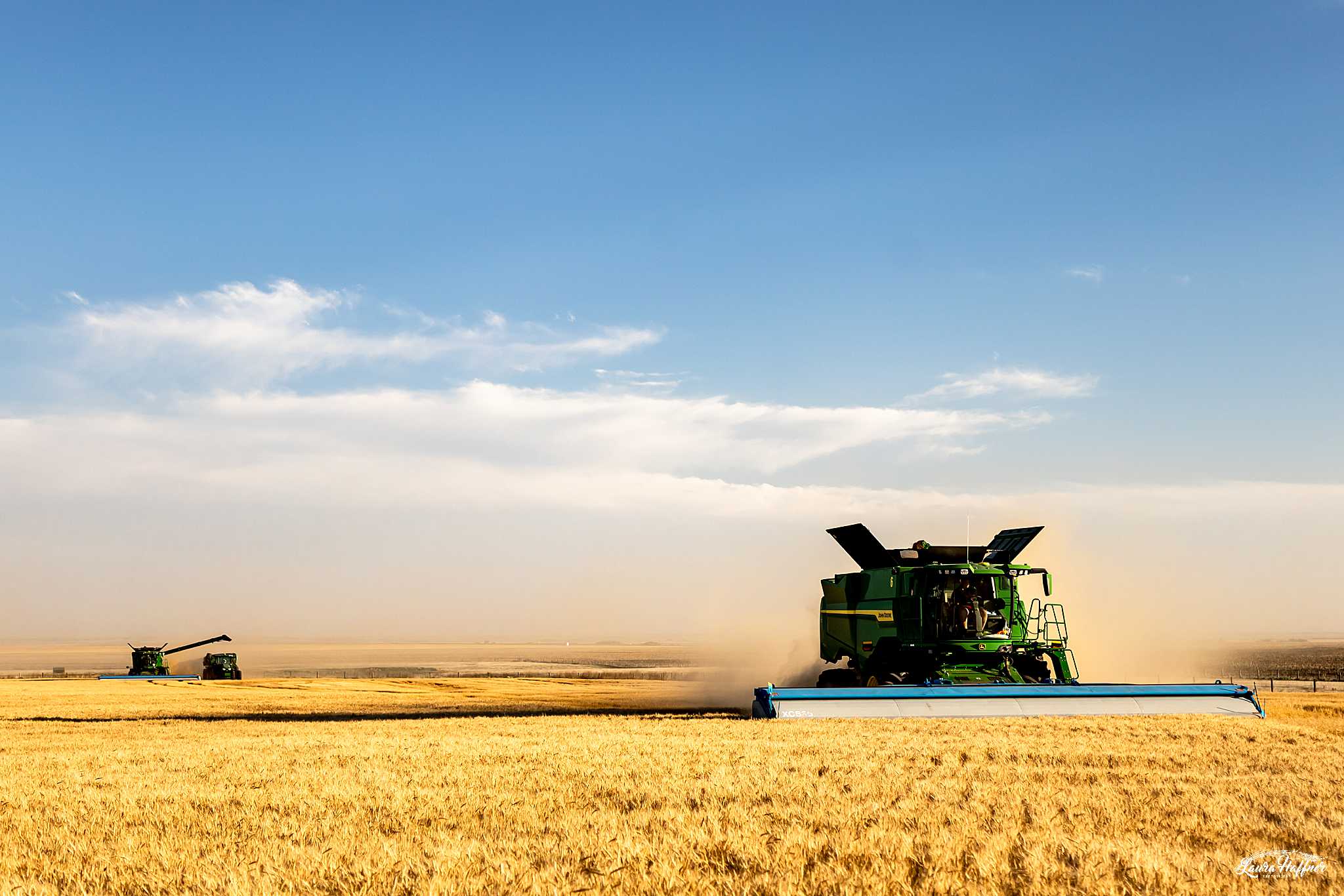
Laura: The little wheat that could…
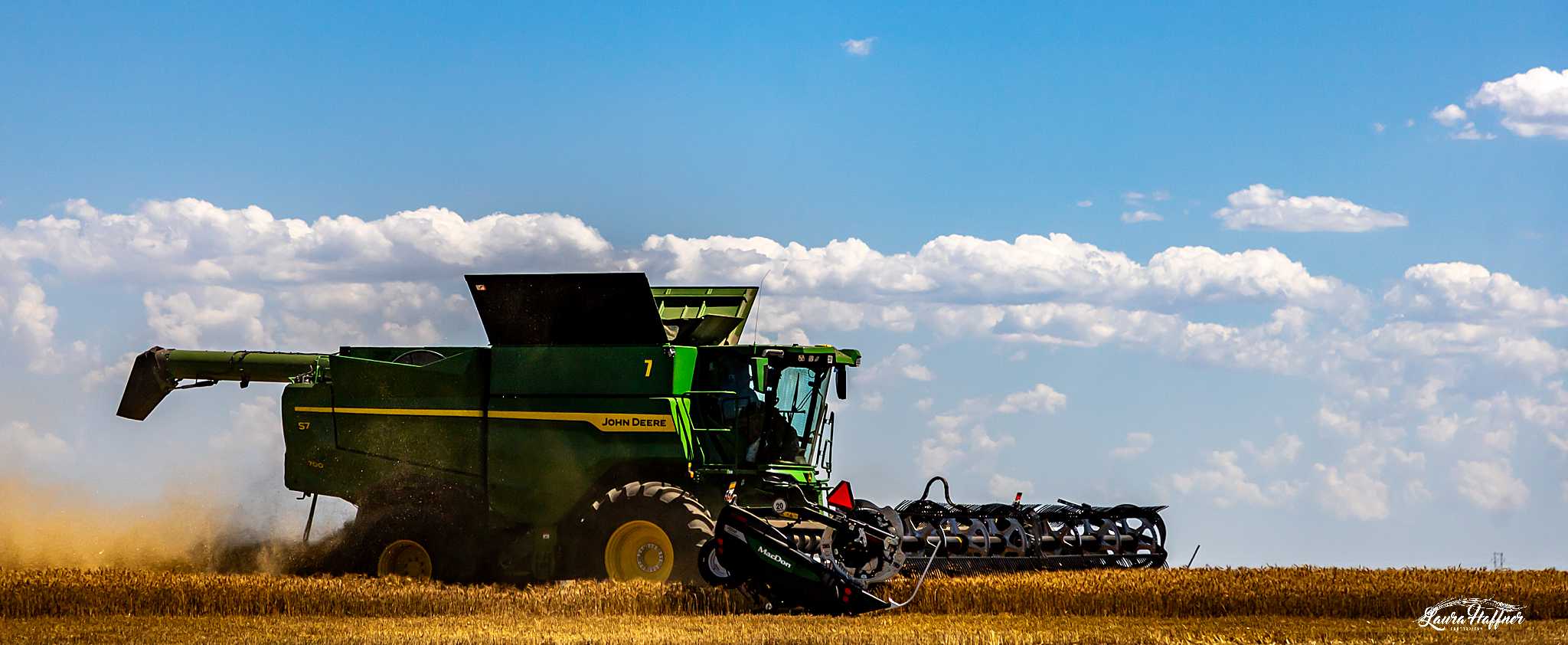
Western Kansas: I suspect many of you have likely read the beloved children’s book “The Little Engine That Could” by Watty Piper. If you haven’t, I suggest you do. It is a story of a small, blue train engine’s heroic optimism and hard work which allows her to overcome obstacles, when others wouldn’t, to get her precious cargo to its final destination.
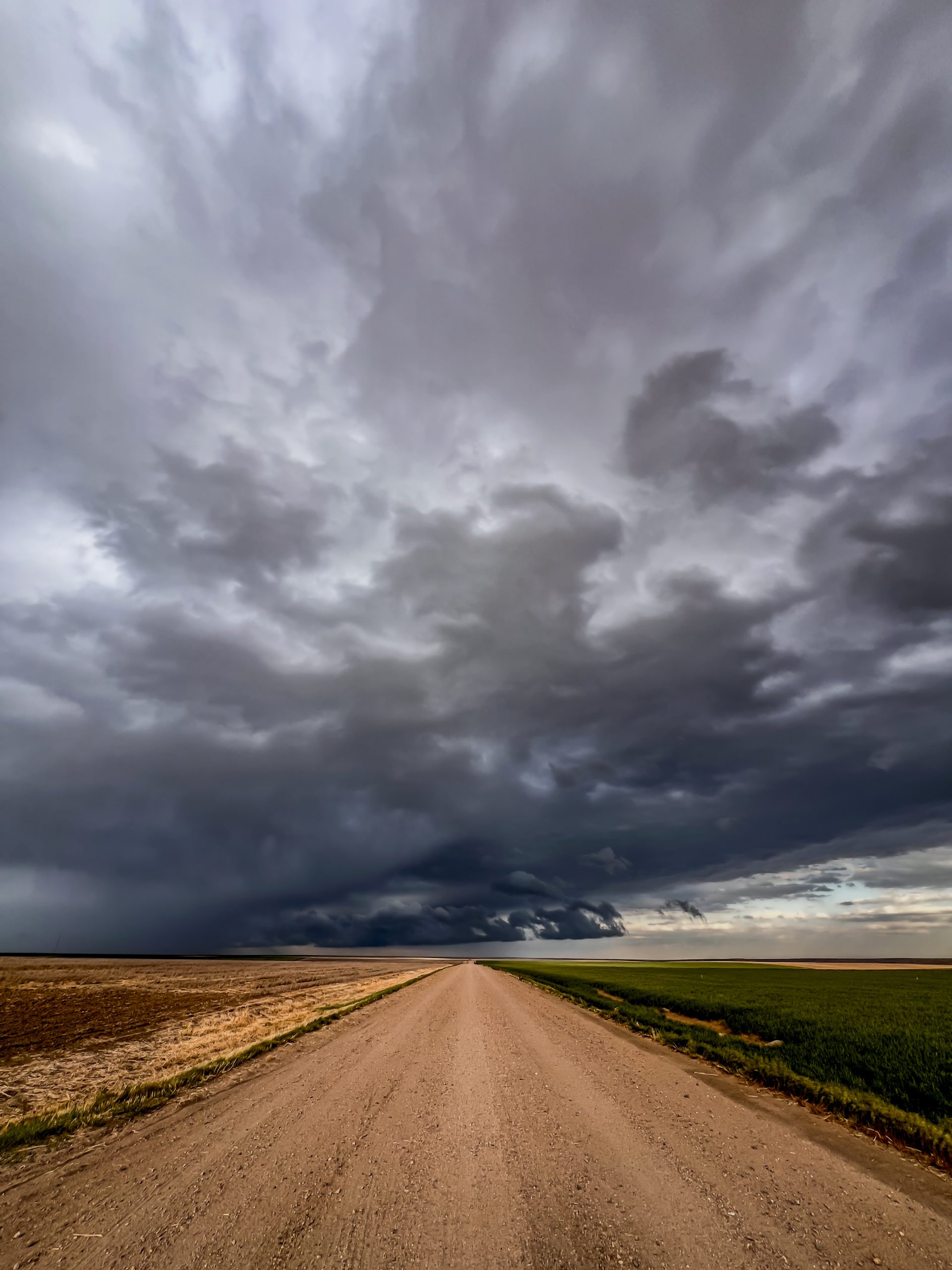
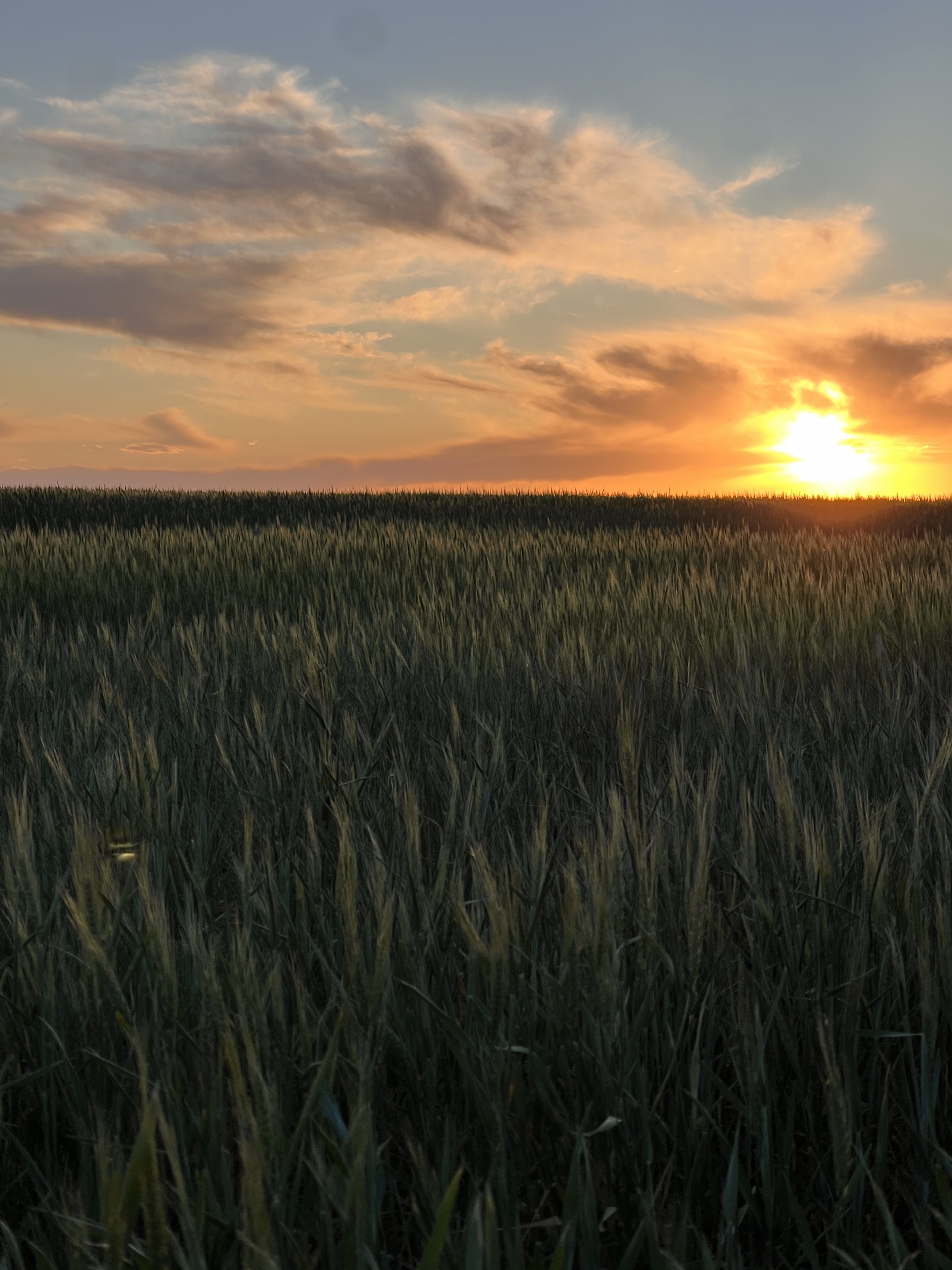
You may be wondering what this has to do with harvest, but I think it is an appropriate analogy to describe what I observed this spring in western Kansas when traveling down the road to help coach track meets. Week after week, the wheat continued to chug along. Then as time passed, fields gradually started to go backwards. First the color of green subtly started to change shades. Then the plants themselves just looked sick. It’s not easy to explain what this is like, but you don’t just know, you feel it when you see it. Soon after, necrosis kicked in around the edges of the field and would gradually spread inward. This wheat represents the engines that could not or would not make the journey with the blue engine.
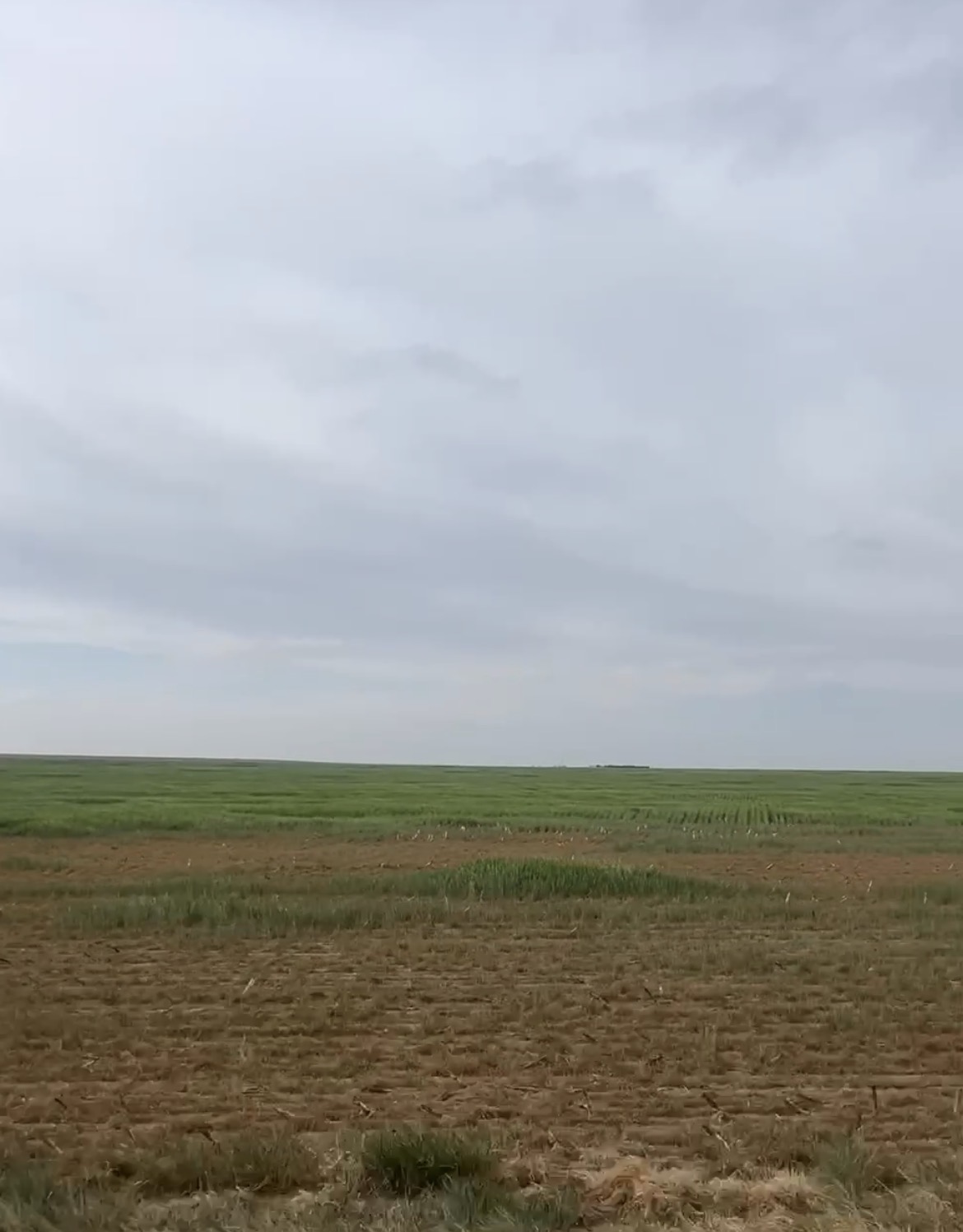
But then, there were some fields that by the grace of God, and maybe a little timely sprinkle that have somehow hung on. Like the blue engine from the book, they aren’t the biggest or strongest yielding fields, but they made it until the end despite all odds.
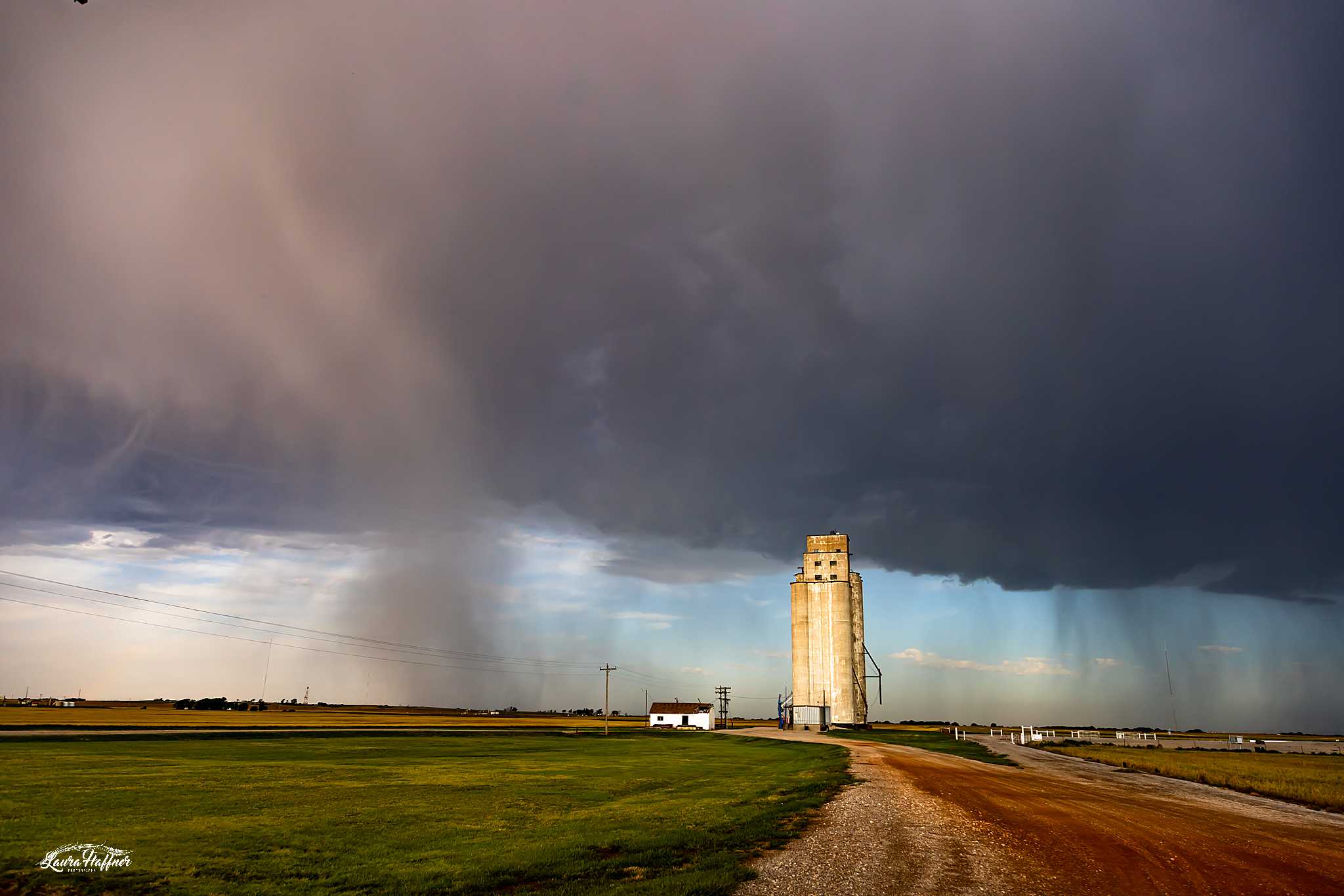
It is not unusual for a stop to suffer damage or even have some fields lost from weather related incidents. It’s rarer to have an entire farm wiped out. It is virtually unheard-of to lose an entire state. However, that’s now what has happened, in not one, but two consecutive years due to drought in the state of Texas. The carnage didn’t end there. All that was left of our south-central Oklahoma stop was a few hundred acres. In fact, if you access The University of Nebraska’s drought monitor, you’ll learn that a substantial drought follows the traditional routes of many custom harvesters.
In the book, the “Little Engine That Could” dug deep within herself and kept going. I see this happen daily in our own operation and farm families like ours. The amount of faith, optimism, and work ethic from people in agriculture is nearly unmatched which allows us all to overcome insurmountable odds time and time again.
However, unlike the book, sometimes something happens to our “tracks”, which causes a delay or us to miss end end goal all together. Weather, markets, rising input costs, rules and regulations are largely out of our control which creates a perfect storm for stress. Sometimes, despite a tremendous effort, things just don’t work out as planned. Internal pressure gradually builds, sometimes without us evening realizing, especially when it happens season after season.
I know many of us think of mental health when it becomes a crisis, however, we must learn to find healthy ways to manage it before it gets to that point. At the end of the day, you and I both matter more than our farms and businesses. I know it’s not that easy when the legacies of generations are often on the line. Because of the nature of the work, agriculture can be isolating at times and it’s easy to start believing it’s only us. I know from my travels and involvement through work and agriculture organizations that most people I talk to experience all levels of stress and share many of the same concerns. We can’t be afraid to lean into our trusted friends and family during tough times or check on them either. If a crisis is happening, 988 is the hotline to reach for immediate support of a trained professional. If you just want to learn more about how to support rural stress whether your own or a loved one’s, Rural Minds Matter through Kansas Farm Bureau is a great place to start. In addition to our farms, one of the greatest legacies we can leave is a physically AND mentally healthy rural America.
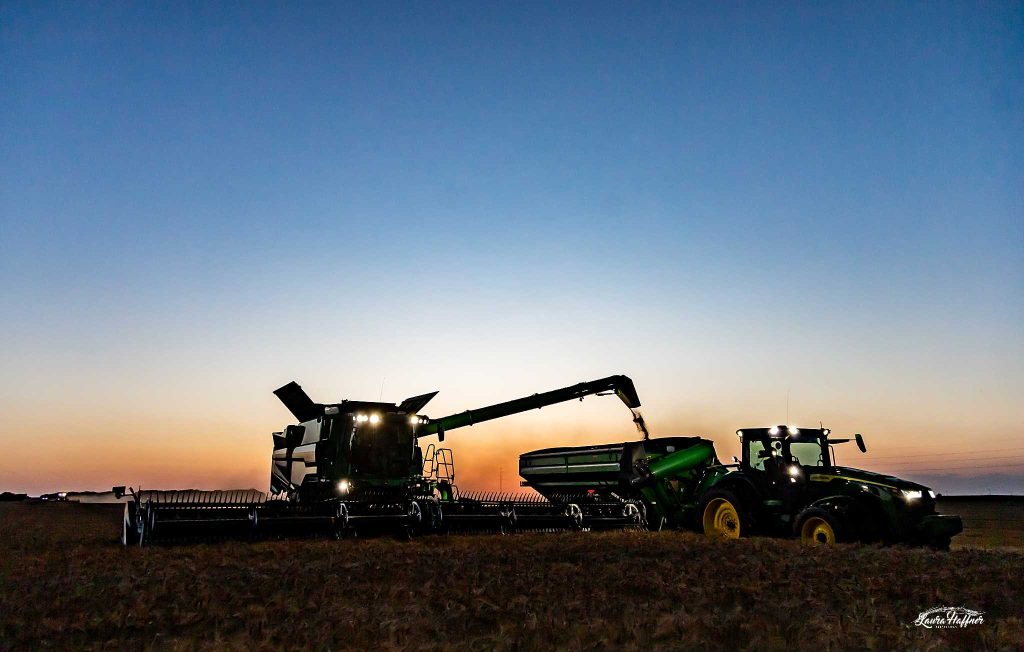
Even with all of these known stresses in front of us, and those we don’t yet see, we are looking to make the best of our 15th season of High Plains Harvesting. For those new to this corner of the agriculture world, my name is Laura Haffner, and for over a decade, I’ve had the privilege of sharing stories from the harvest run. Our crew is based out of Park and Hays, Kansas, respectively. Our summer crew consists of over 20 team members, many of which have been with us for previous seasons. It always feels like a bit of a homecoming with we see familiar faces return, but we also look forward to meeting new ones too.
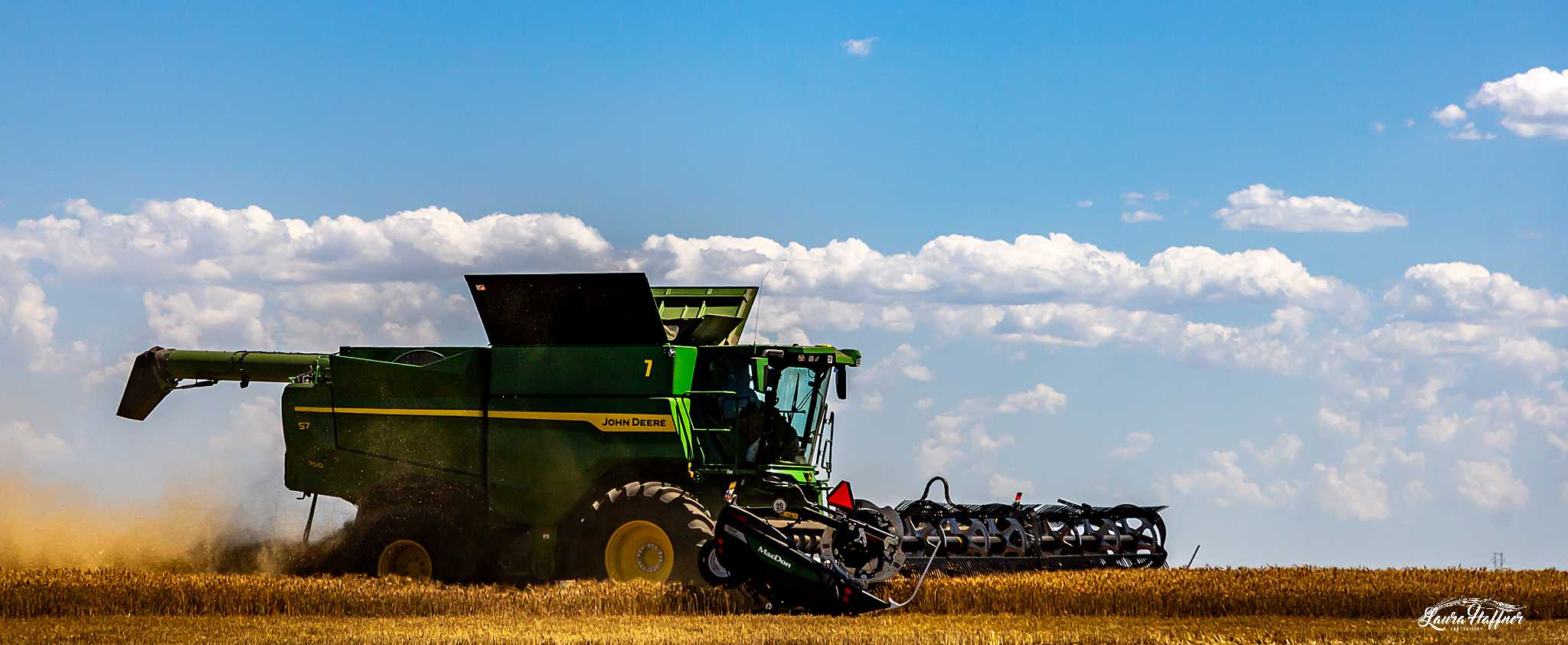
On May 21, the crew took the final loads down to the Kansas/Oklahoma border which marks the earliest we’ve ever staged at that location. This year we’re running S7 John Deer Combines with draper or stripper headers per the request of our customers. May 25 goes down in our team’s history books as the most northern start we’ve had. The wheat here was slightly below average in some places, but considering the weather this year, we’re thankful for each acre. Yields were in the 30s in many fields with a wide range of test weights from the high 50s to mid 60s. A few fields even spiked over 50 bushels per acre. Our time here was marked with spurts of cutting and then stretches of waiting out rain and high humidity. As a result of these moist conditions, weed pressure was coming on strong by the end of our stay.
Our crew has now moved to western Kansas where our opening fields were a bit of an unexpected surprise with 50-70 bushels per acre hitting the yield monitor. With the lack of rainfall this spring, I don’t expect this to be a consistent representation from this part of the state, especially when some fields have already been zeroed out. Time will tell, but in the meantime, our crew is geared up and ready to make the best of what we find!