More pushing calf prices than markets, according to economist at K-State Cattlemen’s Day
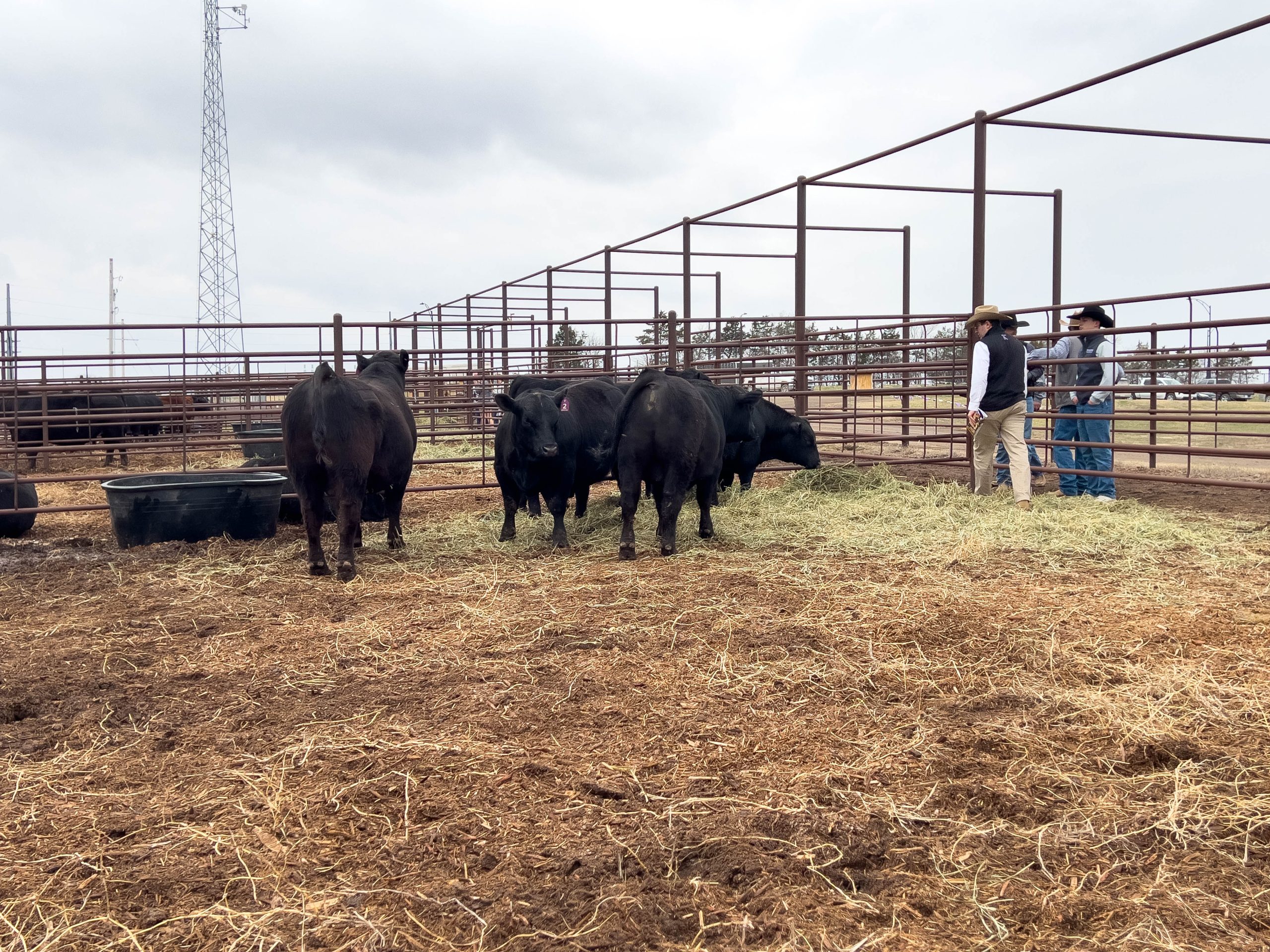
Agricultural economist Glynn Tonsor told attendees at the annual Kansas State University Cattlemen’s Day in Manhattan, that several drivers are pushing cattle prices. And beef prices for that matter.
He had three goals for the talk—give an overview of the market and prices; press people to understand why those prices are what’s available; and the economic viability that comes out with those prices.
“I am all for understanding the size of the industry from the sense of the number of cows. But everybody in this room knows we have fewer beef cows than we did last year than we did five years ago, so forth. It’s not new,” Tonsor said. “And to be quite blunt, it’s not the most important supply metric in the industry. It’s beef pounds on the market is the one that’s more important.”
Tonsor said the fact there is more pounds of beef product available now is more important than the number of hooves on the ground. Cattle have been producing more pounds for many years. He spends time understanding, tracking and monitoring meat demand on a broader level.
“I’m here to tell you that beef demand is a more important thing than anything in supply the last two years, on your price outcomes, but yet we talk about number of cows all the time,” Tonsor said. “Understanding that is really important for understanding the legs of this market, how long it might go forward and so forth.”
Having the “grow the pie” mentality right now means working together, investing and growing beef demand and growing the economic pie.
“Consumer investment back into your industry has been very fruitful for this industry,” he said. “Last couple years, I made that very clear, but it didn’t happen overnight.”
Tonsor said it has been a multiple decade effort.
He dug deeper into the data and said the volume numbers of beef cattle at commercial slaughter harvest is declining at a much faster rate than beef production. But production in the last few years has been able to offset the decline in hooves with more meat per hoof.
“Everybody talks about dress weights in the feed yard—and that’s probably the biggest part of that. But I want to interject, it’s not just that,” he said. “There’s lots of other success and efficiency stories in the industry we talked about, but we’ve managed to produce more beef than we thought we would, because we continue to have more on each animal going through the system.”
There has been less domestic beef production happening, and it’s expected to continue for at least the next two years. The Livestock Marketing Information Center is forecasting additional increases in fed cattle over the 2025 levels, but they’ll be much smaller increases than what was noted between 2024 and 2025.
Beef demand
There’s more to the cattle market than counting cows, and the big picture when it comes to demand, led Tonsor to describe a talk he gave back in December—motivated by the question, “we know cattle prices, and specifically here, beef prices have elevated. How much of that increase is due to consumer beef demand growth, and how much of that is due to changes in supply?”
“We would tell you both have a play,” he said. “Because we’re economists, we think you got to understand both supply and demand, and both have a role. But how do we assign that beef price increase to those two different forces?”
Tonsor said in 2024, the average American consumed more beef than they did the year prior, even with price increases.
“You only grow price gain quantity in a market with demand growth. You don’t need a PhD economist in front of you to geek out on that. That’s a pretty basic concept,” he said. “The only way you grow both price and quantity is for demand to have grown.”
In 2024-25, the volume increase wasn’t easy to talk about because there was a domestic production pullback that, for the most part, was offset by imports. But not entirely.
“I’m a little cautious how I say that, but the main point I want to impress on you—demand increase has a lot more to do with your $5 calf than anything in the supply cycle, and the better we appreciate that, the more optimistic I am about viability going forward,” he said.
Historically, consumption of beef per person has been around the 70 pounds a yer per person mark. In 2025, for context, Tonsor said it was just below 60 pounds of beef per person.
“The average American consumed basically the same amount of beef in ‘25 as they did ‘24, but paid more for it, code for demand proof,” he said. “We’ve had several years of good beef demand growth. It’s not a new statement, but I hope you’re hearing me loud and clear, is this is the main driver of those $5 calf prices. Nothing on the supply side.”
Now the why. Tonsor said it’s important and it’s giving the higher calf prices.
“Now, a deeper question might be, why has demand grown? And, dare I say, how long can it last?” he said. “There’s a couple components to the why, in my opinion, first, is not unique to beef, and this would be the broader meat demand. Protein is in. The public wants more protein kind of narrative which is beneficial to beef.”
Added demand is not unique to beef, but it does help. Tonsor said during his studies they’ve found vegan and vegetarian rates are not growing in the U.S., and they’re actually declining, according to data.
Tonsor is also part of the Meat Demand Monitor at K-State, and it asks people various questions about their meat consumption, or what they call protein monitors. Most often they use a list of 12 criteria asking respondents what the four most important factors are when they decide to buy protein and what are the four least important for them.
“It’s way more common for somebody to tell me taste is a key determinant than it is environmental impact,” he said. “I want to jump to taste specifically for a moment. The development away from Select cattle, the changes that has with marbling and so forth, is probably related to a taste outcome that’s favorable from the public’s (view).”
If taste is the No, 1 determinant, even more so than price, it’s important to note.
“Beef has benefited by improving its taste in the eyes of the public,” he said. “I think beef specifically has benefited from the taste component much more than pork or chicken, and it really drive this home for taste.”
Tonsor believes there will only be increases in expenditures if there is consumer demand growth.
“You only get the pounds part of that if the demand pull is there as well, but we only physically pull it off with those heavier dress weights that we noted earlier, partially offsetting fewer hooves,” he said. “You only get it with additional imports, by the way, because this is no longer just a domestic number. This is all the people in the market.”
There were more imports in ’25 than in ’24, and retail has benefited away from food service, he said.
Tonsor gets many questions about what beef demand is and how it is good for consumption.
“How do we think about it? How should the U.S. approach it?” he said.
American beef has a comparative advantage over other beef because its mostly grain finished.
“It’s basically U.S. and Canadian thing on the global space. Know what the public wants, and go chase it,” he said. “That isn’t a number of cows discussion.”
That doesn’t happen overnight, and it’s accurate to say since 2016 it’s been a bit of a success story as far as improvement in quality of cattle goes.
“The improvement in the quality of cattle occurred in no small feat because of the beef quality signal and market mechanisms that encourage producers to change what we breed, how we breed it, how we feed it,” he said. “Absent those signals, absent of mentality and approach to grow the pie, dare I say, you don’t have today’s beef quality.”
Tonsor said the deeper point is long-term economic signals to produce high quality beef takes longer to pay off, but market signals are needed to encourage it.
“I think you’re getting the fruits of that when we look back at 2025 calf prices as an example,” he said.
Anything that develops within the industry or policy sphere or anywhere that erodes beef demand is hurting the hand that feeds cattle producers or anyone in the beef industry.
“The improvement in the quality that’s developed is paying off in this industry. We need to better appreciate it, and we need to be very, very careful of any proposed action that would erode either demand itself or the incentives of the industry to meet the demand,” he said. “That’s my word of caution going forward, because there’s a lot of those things around the table, so be careful and don’t shoot your own big toe.”
Kylene Scott can be reached at 620-227-1804 or [email protected].