K-State Extension specialist says that gardeners do not need to worry about ants being a problem on peony flower buds during the spring season
Consider this: Having flowers in a garden can provide curb appeal, boost home value and help benefit the environment, but what if they also symbolized imperial power, wealth and prosperity?
Peonies were once cherished by Chinese emperors, particularly during the Tang Dynasty, and are known as the “king of flowers” in China. But with these flowers that once grew in royal gardens comes a six-legged critter crawling over their buds: Ants.
These insects may cause concern for some, but a Kansas State University specialist said there is no need to worry.
“The presence of ants on peonies may alarm gardeners at first,” said Matthew McKernan, K-State Extension horticulture expert. “However, their abundance is perfectly normal and part of a mutually beneficial relationship.”
Peony buds develop specialized glands on the outside, known as extrafloral nectaries, that produce sugary nectar. That nectar provides a good energy source for ants.
“Ants feed on this nectar and emit a pheromone that alerts and invites other ants to the food source,” McKernan said.
As ants converge onto peony flower buds to consume this nectar, they also provide a benefit to the plant: specifically, indirect protection.
“The ants work to protect this high-value food source from other insects and, as a result, help defend the blossoms from floral-feeding insects that would damage the plant,” McKernan said.
This symbiotic relationship benefits both organisms. The ants receive a beneficial energy source, and the peony flower buds are protected from insects that would feed on the flower itself.
This relationship, McKernan said, disproves the common gardening myth that peonies require ants to bloom.
“While the peony does not need ants to bloom, it is to the plant’s benefit that the ants are present,” McKernan said.
Once peonies have finished blooming, the ants will naturally leave, seeking other energy sources from surrounding plants and food sources.
“Therefore, the use of insecticides is strongly discouraged,” McKernan said. “Ants on peonies are both temporary and beneficial.”
Though, if gardeners would like to enjoy cuttings of the “king of flowers” indoors, McKernan provided some advice on preventing ants from entering homes.
“If you would like to enjoy cut peony flowers indoors, simply hold the stems upside down outdoors and gently shake the ants off or rinse them away with water before bringing the flowers inside,” McKernan said. “This will be most easily accomplished when the flower buds are beginning to show some color, but before they fully open.”
McKernan and his colleagues in K-State’s Department of Horticulture and Natural Resources produce a weekly Horticulture Newsletter with tips for maintaining home landscapes and gardens.
Interested persons can subscribe to the newsletter, as well as send their garden and yard-related questions to [email protected], or contact your local K-State Extension office.
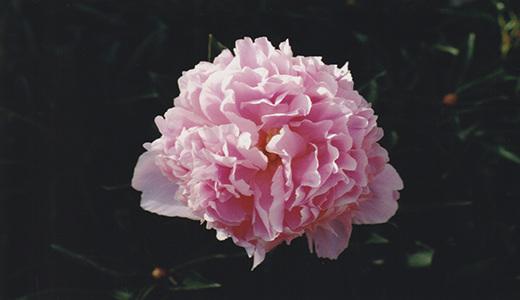
PHOTO: Peonies. (Courtesy of Kansas State University Research and Extension.)