
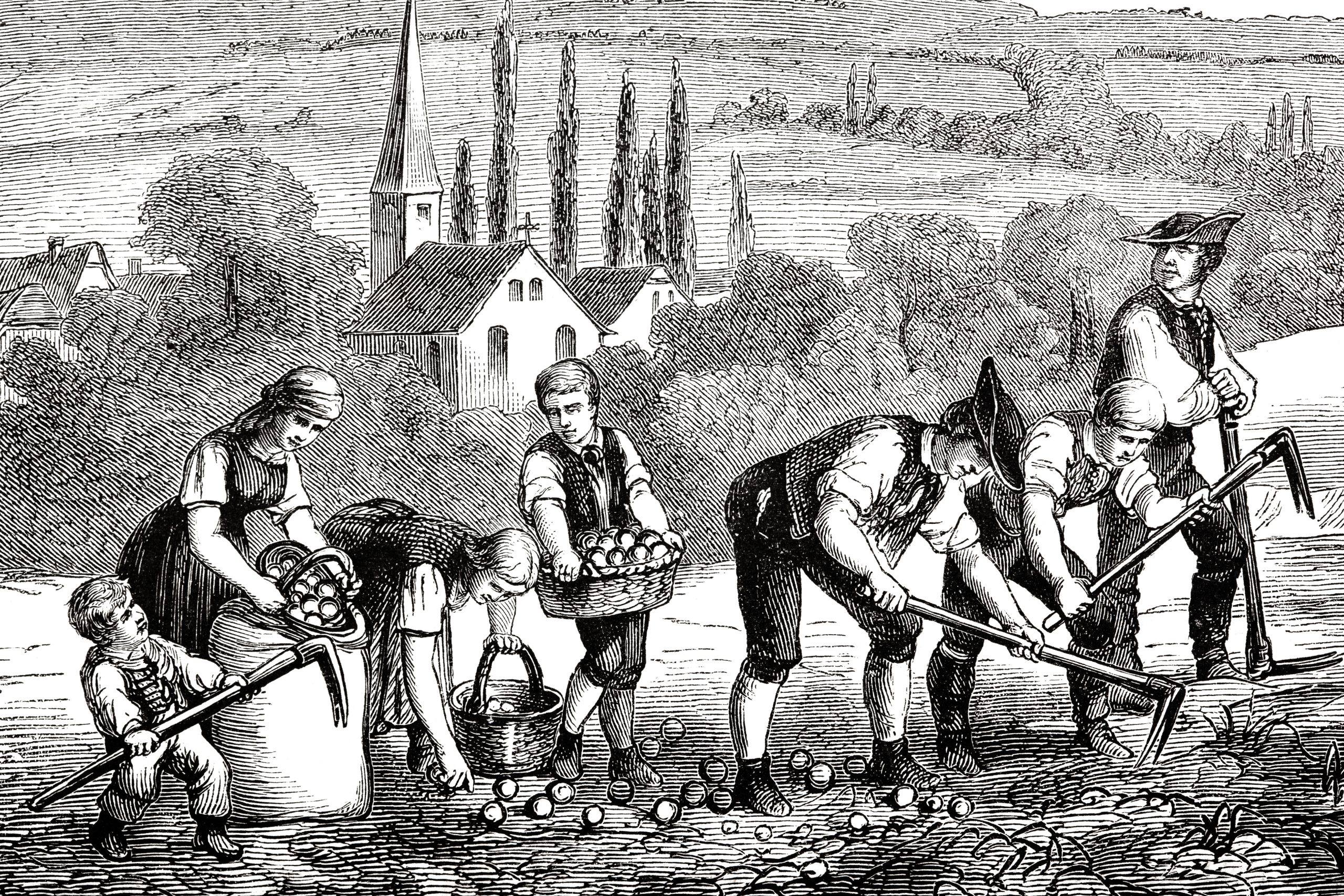
As the nation celebrates America’s 250th anniversary, it is easy to wonder what life was like for the colonists who settled in America, developed towns and cities, rebelled from their home country and took a risk that resulted in the birth of the America we live in today.
While the names of Paul Revere, George Washington and Benedict Arnold are familiar to most Americans, the lives of the farmers who made up much of the colonial population are less well known. What did daily life look like on a farm in 1776?
A day in the life of a colonial farmer
To better understand life on the farm during the Revolutionary era, High Plains Journal spoke with Richard Lyman Bushman, an American historian, Gouverneur Morris Professor Emeritus of History at Columbia University, and author of The American Farmer in the Eighteenth Century: A Social and Cultural History.
Bushman said farming carried significant social standing and noted that agriculture was widely viewed as an honorable profession and the foundation of society.
He said for most farmers during the Revolutionary War era, the workday began before sunrise and often depended on a single factor: the weather. Without meteorologists and weather models to guide agricultural decisions, most of a day’s work depended on what nature allowed on a given day.
“The farmer’s first task was to provide for his own family,” Bushman said. “That was the great miracle of a farm. Even if you had just a little bit of land, 20 or 30 acres, you could make a living out of it and provide for your children. In the 18th and early 19th century, it’s the farm that made the American Dream possible. You could establish yourself; become respectable and self-sufficient, and that’s almost entirely because of the land.”
Children played a critical role in farm operations. Bushman said by age 11, many became part of the workforce, receiving daily assignments and helping with chores ranging from caring for animals to working in the fields.
Farmers in society
Bushman said farmers were not thought of as a class or occupation in the 1700s because everyone dabbled in production agriculture. The percentage of individuals raising their own food was vastly different in the 18th century compared to today.
Bushman said it is believed about 75% of the population were considered farmers, but almost all households raised most of their own food, even if they did not consider agriculture their occupation.
“If you were a merchant, you probably had some acreage out of town where you were raising your own food. The highest, most elegant classes in America, were the planters of Virginia and the Carolinas, and they lived on a scale that exceeds anything anywhere else in the colonies. The merchants in the North, were the highest class, in that region, but they also would have some farmland.
“It was a very complex economy that they had to manage. Everyone tried to provide for themselves as much as they could to avoid extra costs, because money was scarce. They didn’t want to buy food with it when they could raise most of the food they needed on their own. Even people in cities would have pigs or a cow in a little barn behind their house.”
Additionally, farming in the colonies was rarely limited to growing crops. Bushman said many farmers, especially in the North or Middle colonies, supplemented their income through specialized skills such as tanning, surveying or seasonal labor.
The goal was to generate enough cash to purchase items they could not produce themselves. It was about survival, rather than pushing yield and production.
“They’d be astounded at the (modern) yields, the equipment and all the science, and they’d maybe be a little bit nonplussed by the business side of it,” Bushman said of the complex financial aspects of modern farming and turning a profit. “The farmers (in colonial times) were not really commercial farmers, trying to get the maximum yield. They just sort of got what they could.”
Trade markets and taxation
Agriculture also played a significant role in international trade as the Colonies produced enough food not only to feed themselves, but also to supply overseas markets. American farmers exported wheat, rice, corn cotton, and other commodities to Europe and the Caribbean.
“It was an immensely productive system of farming,” he said. “In Europe there would be famines, and there wasn’t enough food for people. America had never had a famine, always could feed itself, and in addition was shipping part of their harvest to England.”
Trade became especially important because colonial farmers depended on imported goods. Tea, coffee and liquor were among the products many families sought to purchase. Bushman said certain necessities, including salt for livestock and food preservation, were difficult to obtain locally and relied on trade networks.
Despite modern perceptions that taxation fueled widespread colonial anger, Bushman said many farmers initially viewed the political turmoil from a distance and stayed out of the discord.
“Most of the conflicts and riots we hear about occurred in cities,” Bushman said. “Farmers looked on and they didn’t like taxes—nobody likes taxes—but they weren’t aroused. The countryside riots came much later.”
However, many of them would later step onto the battlefield and fight in the Continental Army. Bushman said labor became one of agriculture’s greatest challenges during the Revolutionary War as men left farms to serve in the military.
Northern, Middle and Southern colonies
Bushman said there were vast differences in farming when it came to the Northern, Middle, and Southern colonies. This included weather, labor, crops, and the size of farms.
“The farmers in the North, New England and the Middle colonies thought of 60 to 100 acres as a workable farm that would have some woodland, crop land and pasture,” Bushman said.
Such farms were often designed to achieve what Bushman described as a “competence”—enough land and labor to provide food, clothing and household necessities, without heavy reliance on outside purchases.
However, a 60-to-100-acre farm in the South, was what Bushman described as enough for a commonplace farmer, but it was below average for the region. The South included 1,000-acre plantations that provided well beyond a competence, and required many laborers.
In the North, horse or oxen-pulled plows were necessary for planting crops, as well as a place to thresh wheat, while tobacco sheds were crucial for raising tobacco in the South.
Climate and labor
The climate was also vastly different in the North and the South and that determined the crops to be grown. Tobacco and rice dominated commercial production in the South, while Northern farmers typically grew corn, wheat and fruit in orchards.
“Rice was the great high-value crop, because you could sell that in the West Indies to feed the slaves,” Bushman said.
In the South, the growing season was much longer. Livestock could graze 11 months out of the year and the long growing season for crops made year-round agricultural labor justifiable, which led to the expansion of slavery on the region.
In the North, the planting seasons were much shorter. The ground was frozen for three to four months out the year, and livestock had to be fed grain and hay due to the limited grass availability.
“They might hire help for nine months out of a year, but they also relied on family a lot for their labor,” Bushman explained.
The same goals and challenges
Although Revolutionary-era farmers would scarcely recognize today’s equipment, precision technology and global markets, Bushman believes they would recognize many of the pressures facing modern agriculture.
Just like today, the weather posed constant risks for farmers during the revolution, along with pests, crop diseases and rodents.
Bushman said soil health—although that term wouldn’t be coined for a couple of centuries—was also a concern. Fresh land often remained productive for 10 to 15 years before requiring periods of fallow recovery. Bushman said crop rotation and careful land management helped maintain soil productivity.
After the war, many farmers faced inflation, high taxes, and poor production years leading to debt, which was a major pitfall for colonial farmers.
“Debt was the great terror of the farmer in that day, because eventually debt can attack your property,” Bushman explained. “That’s the point at which you know you’re being undermined in your very basic enterprise.”
For colonial farmers, success was measured by simple, but demanding goals: Feed the family, keep the farm productive, avoid debt, and leave something behind for the next generation. Those ambitions still remain with modern farmers.
The weather still dictates outcomes. Debt remains a threat. Families still hope their children will find a future on the land.
The farmers who fed the American Revolution may not have imagined modern agriculture, but many of the values that sustained them—hard work, self-reliance and stewardship of the land—continue to shape American farming 250 years later.
Lacey Vilhauer can be reached at 620-227-1871 or [email protected].



