Smaller U.S. wheat production versus sufficient global supplies
As the calendar flips to July, traders will likely shift focus to United States and global weather.

Specifically, traders may likely monitor weather in key wheat growing regions of the world.
The month of May saw a tremendous price rally for wheat futures. The July 2026 Chicago wheat futures rallied as high as $6.88-1/4 a bushel while the July 2026 Kansas City wheat futures contract rallied as high as $7.50 a bushel during the month of May due to the reality of a poor U.S. crop.
Unfortunately, throughout the month of June, both contracts have lost nearly $1 a bushel of that price rally as traders now feel that despite a smaller U.S. crop, global wheat supplies remain sufficient for now.
From a marketing perspective
History often reminds us that as quickly as market rallies can occur, the price slide lower can be just as fast. The recent price slide lower, especially for Kansas City wheat, may be perceived as frustrating for producers of that crop, with as poor of a growing season U.S. producers have dealt with.
We are reminded of just how poor that U.S. winter wheat crop is, with the June 22 weekly crop progress report from the U.S. Department of Agriculture showing that current winter wheat ratings are only 26% “good to excellent.” Overall, the ratings remain the lowest in 20 years for mid-June.
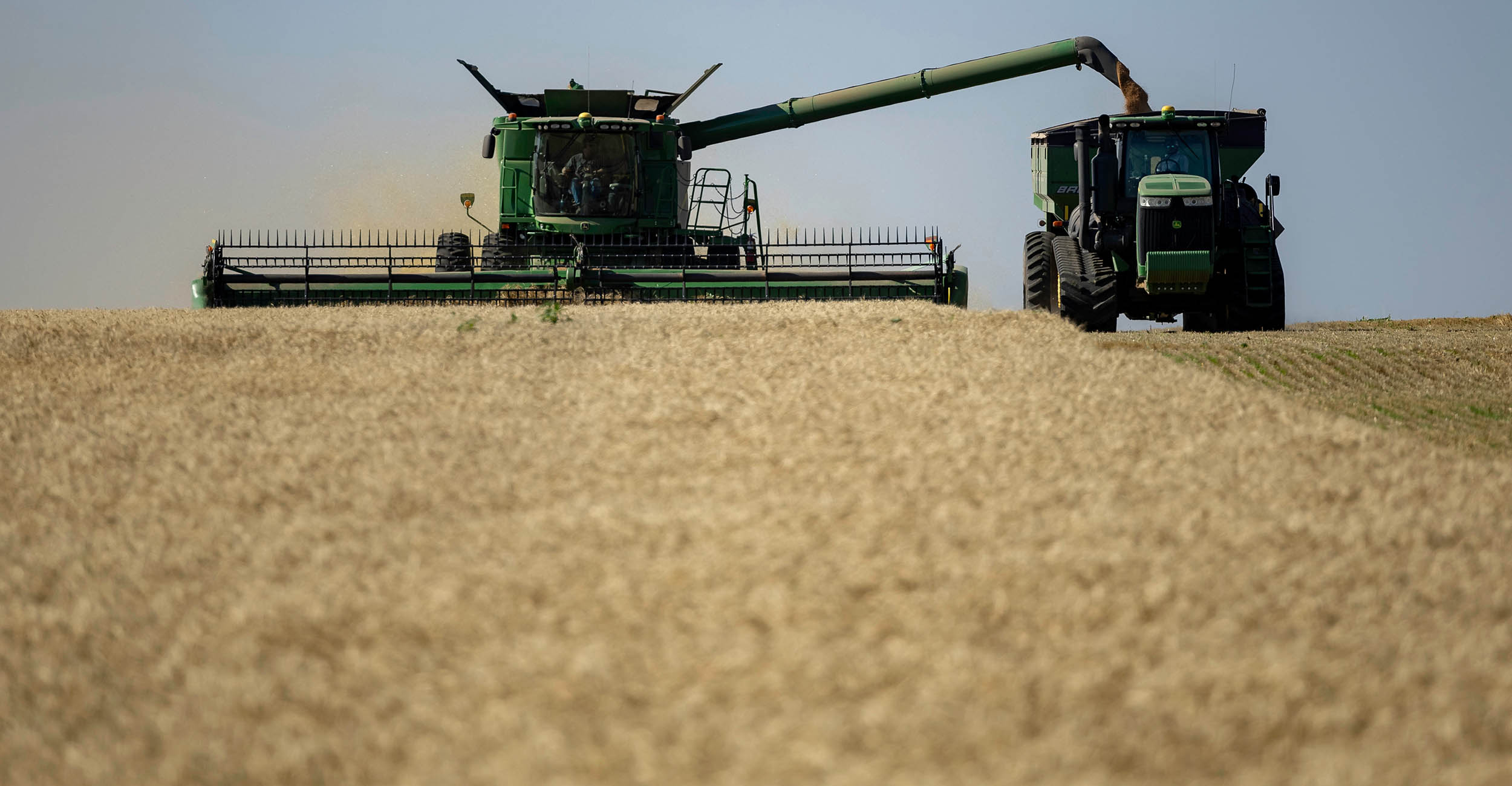
Something else to be aware of is that winter wheat harvest has advanced more than expected. As of June 22, harvest was 40% complete, versus 18% one year ago, and a 5-year average of 24%. With harvest advancing so quickly, it makes one wonder if we will see an even higher level of abandoned acres than the current USDA estimate.
The recent June 2026 USDA World Agricultural Supply and Demand Estimates report acknowledged the smaller U.S. wheat crop; however, traders felt the news may have already been priced into the market.
Looking at the global wheat numbers, the USDA pegged global wheat ending stocks for the 2026-27 crop year at 275.42 million metric tons. While this number is lower than last year’s number of 279.95 mmt, it is comfortably higher than the large draw down of supplies that occurred in 2024-25 when global ending stocks for wheat were pegged at 259.53 mmt.
With perception of ample global wheat supplies, what would potentially make wheat prices rally again in future months? Weather.
I am not a weather guru by any means, but the talk of El Nino has me concerned. The El Nino weather event often means dryer conditions for certain portions of the world. Meteorologists warn of heat waves in Europe, India and Australia.
Specifically, what caught my eye was the portion regarding heat waves and dry conditions for Europe, India and Australia, as those countries are major global wheat producers.
According to the most recent June 2026 WASDE report, the top seven global wheat producers for 2026-27 are China (141 mmt), European Union (136 mmt), India (121 mmt), Russia (88 mmt), the United States (42.01 mmt), Canada (35 mmt), and Australia (28 mmt).
El Nino might adversely affect wheat production in two of the top three wheat producing regions of the world. The top three wheat producers in the world consume nearly all the wheat they grow, with China consuming more wheat than what it produces, relying on imports. What if India has a poor crop and then has to rely on imports as well? That would really change the global dynamics of supply and demand. Regarding Australia, it is expected to produce 28 mmt of wheat, but it is considered a major global exporter of wheat, with the USDA suggesting it would export 22 mmt to the world.
Prepare yourself
In the short term, the perception of ample global wheat supplies may entice fund traders to continue to press the “sell button” with futures positions. Should this occur wheat futures prices may continue to trade sideways to lower.
It will also take some time to see how the El Nino weather pattern plays out in the coming months. And while past performance is not indicative of future results, Chicago and Kansas wheat seasonals suggest prices may grind lower until the late August or September time frame.
Global weather watching for the major global wheat producing countries must be monitored in the weeks and months ahead. Depending on what Mother Nature has up her sleeve, should India, Europe, Australia (or even China) have wheat production issues in the coming months, wheat futures prices could see a tremendous price increase and bull market heading into 2027.
If you have questions, you can reach Naomi at [email protected] or find her on X (formerly twitter) @naomiblohm.
Futures and options trading involve significant risk of loss and may not be suitable for everyone. Carefully consider whether such trading is suitable for you in light of your financial condition. Examples of seasonal price moves or extreme market conditions are not meant to imply that such moves or conditions are common occurrences or likely to occur. Futures prices have already factored in the seasonal aspects of supply and demand. Total Farm Marketing refers to Stewart-Peterson Group Inc., Stewart-Peterson Inc., and SP Risk Services LLC. Stewart-Peterson Group Inc. is registered with the Commodity Futures Trading Commission (CFTC) as an introducing broker and is a member of National Futures Association. Stewart-Peterson Inc. is a publishing company. SP Risk Services LLC is an insurance agency and an equal opportunity provider. A customer may have relationships with any of the three companies.