What you need to know about wildfire smoke
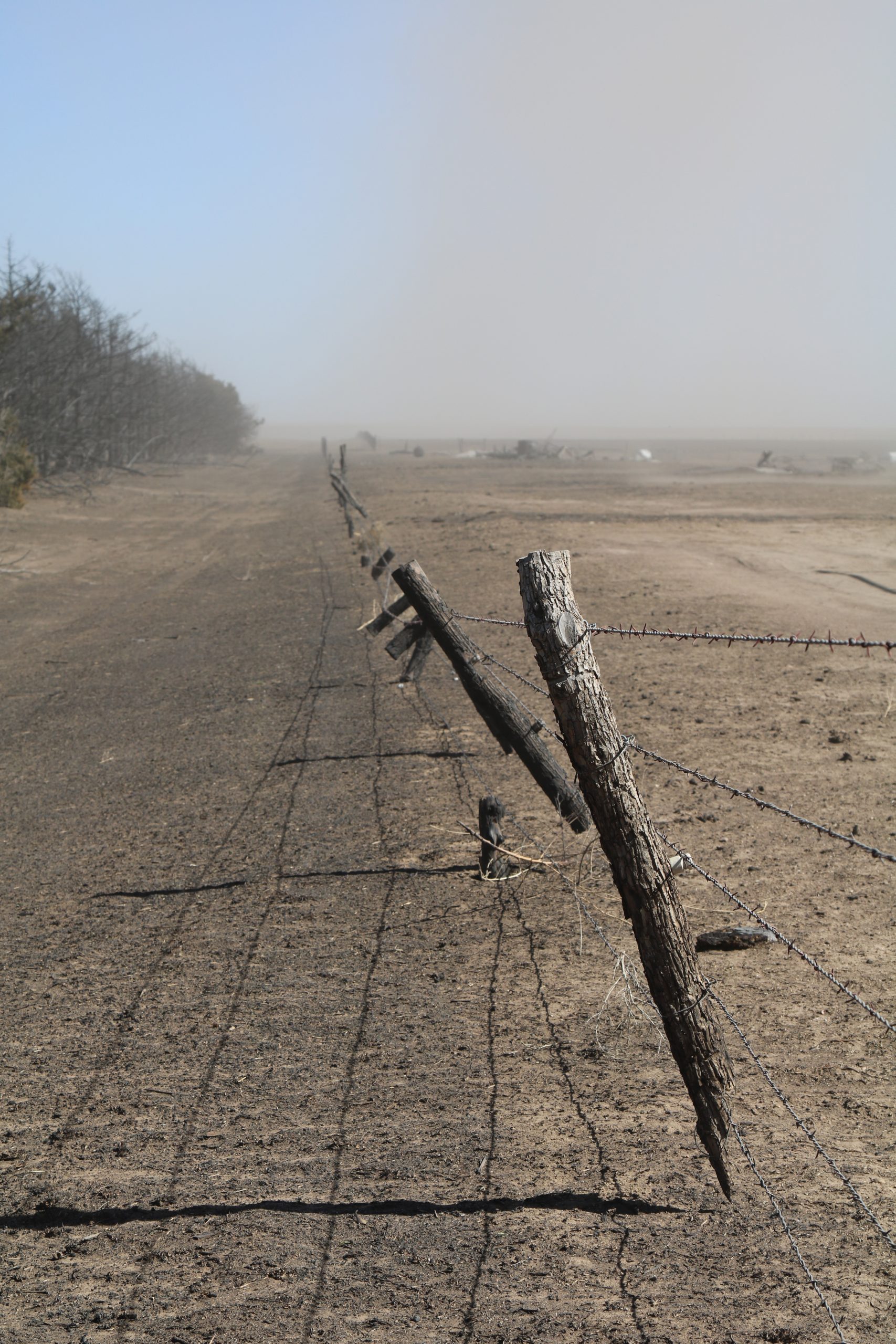
Agricultural workers are often put into situations where their health is at risk. Wildfire smoke puts everyone at risk whether he or she is near the fire or not.
High Plains Intermountain Center for Agricultural Health and Safety, which is based at Colorado State University, along with CSU’s Engagement and Extension, hosted a webinar to discuss wildfire smoke, heat and other challenges agricultural worker’s encounter.
Channing Bice, communications and outreach specialist for wildfire smoke preparedness program at the Colorado Department of Public Health and Environment, discussed practices to protect the health of ag workers from wildfire smoke.
“My goal really is to leave you all with a clear, practical sense as to why wildfire smoke is a health problem, what it means for you and your workers, and what you can do to protect yourself and your workers without having to shut down your operation when wildfire smoke hits,” Bice said.
She had five questions which included: Why act now when wildfires aren’t new, how smoke actually affects health, why agricultural workers face higher risk than the general public, how to tell when smoke is bad enough to act, and what you can do to protect workers in a way that’s realistic for an operation’s needs.
Action
Wildfires have always been a threat to agriculture and the West, Bice said.
Coloradans have faced many wildfires, with four major ones breaking out in late June 2026. The state is also facing one of the lowest snowpacks on record—which has left vulnerable conditions for those living in the areas.
“Really, this isn’t as much of a hypothetical; it’s happening now and what’s happened over the course of this past summer,” she said. “This wildfire season is really a snapshot of four bigger shifts.”
First, fires are becoming more frequent and larger, and according to Bice, seasons are longer across the western United States and Canada. Second, smoke really travels.
“You don’t need a fire right outside of your community to be impacted by smoke because that smoke is transported from long distances,” she said. “For example, we’ve seen some smoke that’s come from Canada and that’s come from other states as well, and it really hits people who are more biologically susceptible or socially vulnerable that are kind of hit the hardest by this.”
Third, as Colorado’s population keeps growing and expanding, those living in the wildland-urban interface are exposing them to more conditions than ever before. And finally, hotter and drier conditions stretch the season out more and make it more intense.
“None of this is going away anytime soon, which is why sort of building in smoke readiness plan for your workers, rather than treating each smoke event as a surprise, can really pay off,” she said.
Effects
How does wildfire smoke impact health, needed some explanation?
“Wildfire smoke isn’t just one thing. It’s really important to remember that it’s a mixture of gasses and tiny particles, and what’s in it is really going to depend on two factors,” she said. “The first being what was burned.”
That can often range from vegetation, homes, buildings, and unfortunately vehicles. Those include different types of plastics, metals, etc. The second key factor of what’s in the smoke is how it burned—was it smoldering, heavy flames or somewhere in between?
“Those things can kind of determine what that mix looks like,” she said. “Out of everything in that mixture, we really are looking at what’s called particulate matter, or PM, which is the main way that we measure how much smoke is in the air and how it’s affecting our health.”
Particulate matter can be thought of as solids and liquids that are suspended in the air and sorted by different size fractions.
“So often we rely on sight and smell when determining wildfire smoke risk, but even at unhealthy levels, we can only see it or smell it,” she said. “It’s really important to be monitoring the air quality instead of just solely relying on our senses.”
According to Bice, the health effects of wildfire smoke exposure can fall into two buckets—acute effects are the ones that you’re going to feel right away, and the long-term effects.
“That can be irritated eyes, nose, and throat, wheezing, coughing, chest pain, trouble breathing, headaches, and fatigue,” she said. “Chronic risk is really from that repeated exposure over time to wildfire smoke. Of course, smoke can worsen existing disease that people might already have.”
Over the long run, repeated exposure increases the risk of developing asthma if you don’t already have it, and respiratory disease, cardiovascular disease, cancer and premature death.
“That’s why it’s really important to not just keep in mind those acute effects and being able to recognize them right away, but that long-term piece and thinking about how workers are repeatedly exposed over time and that risk that it’s presenting to them,” Bice said.
More at risk?
Agricultural workers are at higher risk, but why?
“Anyone can be affected by wildfire smoke, but that risk isn’t really shared equally, and agricultural or outdoor workers are often carrying (risk) factors,” she said.
Biological susceptibility is the same exposure that produces worse outcomes.
“That’s really going to fall into categories such as older adults, children and teens, pregnant and postpartum workers, and anyone with pre-existing conditions like asthma, COPD, heart disease, high blood pressure, or diabetes,” she said.
Social vulnerability is where the same smoke event leads to more exposure and then worse outcomes.
“Outdoor and agricultural workers are outside for 8, 10, 12, or even more hours per day,” she said. “Even indoor tasks on your operation may be happening in spaces that aren’t well ventilated or filtered and then layer that on with the limits to healthcare access that many people can face.”
Language barriers can also hinder the spread of safety information as does lower socioeconomic status, she said, and managers need to take that into account to help them.
When to act
How do you know when the smoke is bad enough to take action? Bice said this is where the air quality index comes into play. AQI measures several pollutants including particulate matter, ozone, carbon monoxide, sulfur dioxide, and nitrogen dioxide into account, and translates them into one health-relevant scale.
Bice said AQI can tell the user which pollutant is driving the value. There are several reliable air quality information sources, and Bice said to choose the one you like best and that works for your operation, as well as the way you prefer to receive your information.
One source is airnow.gov, where you can check the air quality by inputting your zip code.
“This is really the main tool for checking your air quality. It’s free and is on a website, and you can also have it as a mobile app if you prefer to have it on the go,” she said. “And then from there, you can get a Nowcast reading and a forecast, so you can look at historic trends by month, week, or day, which can be useful in the middle of event to see whether things are sort of up ticking or clearing up.”
The CDPHE’s air quality email alerts can be sent directly to a registrant’s email inbox. She said these emails are helpful because they share advisories and other recommendations when air quality is low.
Do what matters
Bice said now the question becomes what matters most for your operation and how can you protect workers without hurting the bottom line. She recognizes the Colorado landscape and federal air quality index action standards, and what they mean.
“Essentially, there’s no single number or air quality index specific threshold where action becomes mandatory everywhere,” she said.
There are National Institute for Occupational Safety and Health recommendations, and some western states who in the absence or lack of federal rules, have created their own.
“But at 100 or below for the air quality index, it’s a good idea to prepare your crew, train them on air quality related health effects, how to check it, and actions to take, and monitor your crew for symptoms, and of course keep an eye on the AQI,” she said. “And then from 101 to 150, that’s going to be our unhealthy for sensitive groups category there, and you’ll want to be sure to protect your sensitive workers and offer some respirators for voluntary use.”
When the AQI reaches 151 or above, it will be unhealthy for everyone.
“It’s worthwhile to make respirators available to all, and possibly consider stopping outdoor work,” she said.
Management
Bice said to remember the RACE occupational health management framework when dealing with smoke. RACE stands for recognize, assess, control, and evaluate.
“Recognize means knowing that there’s a risk. So, staying aware of fire and smoke events, and knowing the symptoms of acute exposure,” she said. “And then assess means looking at really the specific day. Taking a minute to look at the air quality and smoke forecast for your area, think about your at-risk workers, and think about what work tasks are planned.”
C is for control, and this means taking active steps to reduce exposures for your team, while E is for evaluate.
“You’ll want to check effectiveness of your control measures to see how workers are doing, and of course, air quality can change so quickly that it’s really worthwhile to evaluate and adjust as necessary.”
She said when doing these steps, it’s important to start recognizing the risk. Managers need to know the symptoms of smoke exposure, especially acute effects, so they can take immediate action. Managers should consider signing up for air quality alerts or downloading and activating the AirNow mobile app.
When it comes to assessment, try matching the day to your crew.
“It’s important again to know which of your workers are at higher risk. Review the planned tasks for the day. Maybe think about which task can move, be shortened, or wait until air quality improves,” Bice said. “Or think about the level of strenuous activity as well. And maybe for those lower strenuous activities, think about putting your more sensitive workers on those things like that, and then of course, again checking the AQI, so your current and forecasted air quality conditions, so that you can plan ahead instead of react.”
Control is at the heart of the process. Try to provide air-break areas, if possible.
“This involves closing windows, setting the air conditioning to recirculate, and using portable air cleaners, so your workers have somewhere to recover for a bit,” she said. “Second, if you can, of course, stay out of the smoke altogether.”
This could mean pausing work or moving tasks indoors, if possible. Third would be adjusting the work itself.
“So, thinking about shortening shifts, rotating those high exposure tasks, and allowing more frequent breaks, and of course assigning lower intensity work when the air is bad,” she said. “And when exposure just genuinely cannot be avoided, offer N95 respirators, but it’s important to sort of watch for heat stress with that because respirators and hot conditions together bring their own type of risk.”
Bice said to prioritize reducing exposure first before moving into protective equipment. E, as mentioned, was for evaluate.
“This is going to close the loop, reassess, and evaluate often,” she said. “Just because air quality and the symptoms that you experience can change pretty quickly after an event, debrief with your crew and talk about what worked, what didn’t work, and what you should think about doing differently. Think about updating your smoke preparedness plan and retraining workers, based on your debrief or what you learned.”
Bice said it might be worth considering low-cost, on-site air quality monitors that can give readings specific to location.
Kylene Scott can be reached at 620-227-1804 or [email protected].