Salmonella outbreak traced to cooler highlights hidden food safety risk
A recent Salmonella outbreak tied to a beverage cooler is serving as a reminder that foodborne illness risks can come from unexpected places, especially during outdoor events.
According to Kansas State University food scientist Karen Blakeslee, the outbreak was unusual because it was not linked to a traditional food source. Instead, contamination originated from a commonly used cooler.
“This was an uncommon source of foodborne illness, but it shows that contamination can happen anywhere,” Blakeslee said. “Investigators used traditional methods, along with artificial intelligence tools, to help gather information and identify the source.”
The issue stemmed from repeated use of the cooler without proper cleaning and sanitizing. Because coolers are often used outdoors, they are more exposed to environmental contaminants.
In this case, the cooler drained into an area with standing water, allowing contaminated water to siphon back inside. This led to contamination of melted ice, fresh ice and even beverage cans stored in the cooler.
Blakeslee said this situation highlights how easily bacteria can spread when sanitation steps are skipped.
To reduce risk, she recommends thoroughly cleaning coolers after each use. “Empty the contents, wash the inside with hot, soapy water, then sanitize with a solution of one tablespoon of bleach in one gallon of water,” Blakeslee said. “Let it drain and air dry completely.”
She added that coolers with cracks or deep scratches should be replaced, as damaged surfaces are more difficult to clean effectively.
With county fair and picnic season approaching, Blakeslee encourages people to adopt simple food safety habits when using coolers outdoors. Washing and sanitizing coolers before use is essential, along with separating food and beverages into different coolers to reduce cross-contamination. Raw meat should also be packed separately from ready-to-eat items.
“When you’re outdoors, keep coolers in the shade so they stay cold longer,” Blakeslee said. “And once you’re done, clean and sanitize them so they’re ready for the next use.”
By following proper cleaning and handling practices, individuals can help prevent contamination and keep outdoor gatherings safe. For more information on foodborne illness and proper food handling, refer to guidelines from the Food and Drug Administration.
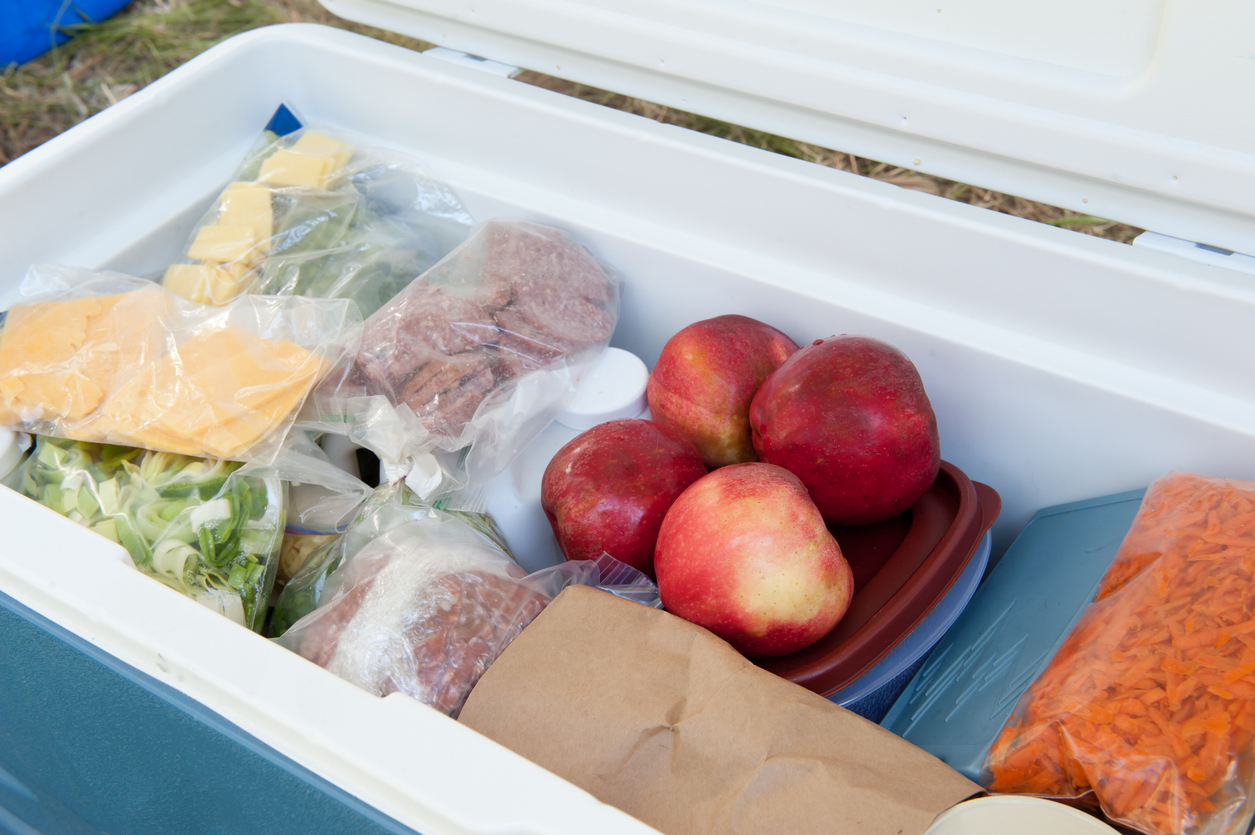
PHOTO: Cooler filled with food for a camping trip. (iStock-#150875029 │ fishysam)