
Meteorologist warns El Niño may bring extremes to High Plains
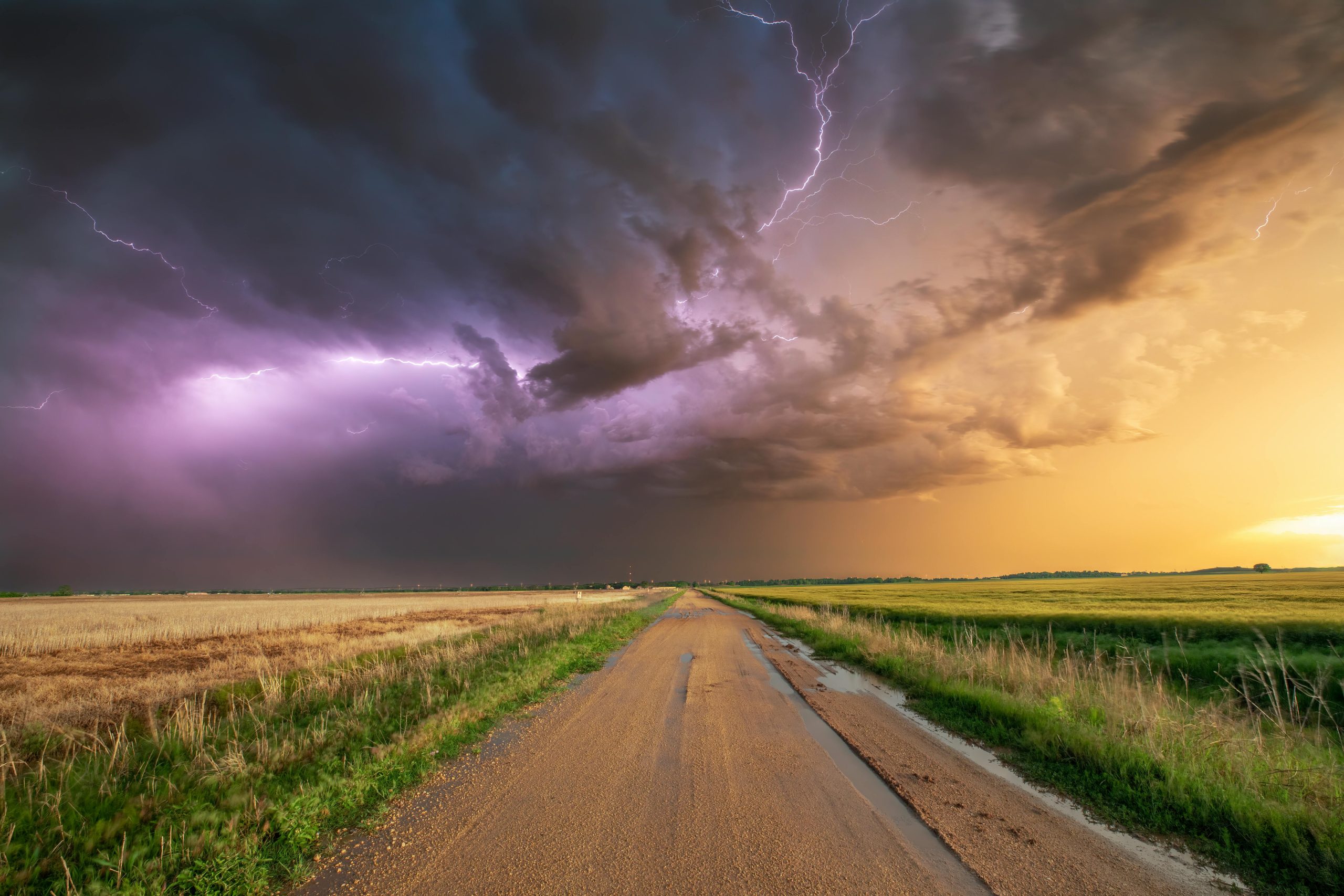
Dry, windy conditions across the High Plains have left many producers questioning when relief will arrive, but a rapidly developing El Niño in the Pacific Ocean could begin shifting that outlook in the months ahead—though not without continued uncertainty. Meteorologist Brian Bledsoe says producers should prepare for variability rather than consistent relief.
Bledsoe, a private weather consultant based in Castle Rock, Colorado, said ocean temperatures in the equatorial Pacific have already reached thresholds consistent with El Niño conditions.
“We’re seeing El Niño conditions right now,” Bledsoe said. “The rate of warming coming out of La Niña into this El Niño is probably the fastest I’ve ever seen.”
La Niña, El Niño, and super El Niño
La Niña is caused by unusually strong trade winds blowing from east to west across the equatorial Pacific Ocean.
“For five out of the past six fall and winter seasons, we’ve dealt with some sort of La Niña,” Bledsoe said. “Rarely in the western High Plains is La Niña ever a good thing. It helps facilitate drought.”
He said broader ocean cycles also play a role. The Pacific Decadal Oscillation, a 20- to 30-year pattern, has remained in a colder phase since the late 1990s. That phase tends to favor more frequent and longer lasting La Niña events, which in turn can reinforce dry conditions across much of the Plains.
El Niño is caused by the weakening and reversal of those trade winds in the tropical Pacific Ocean. While El Niño is often viewed as beneficial for moisture, Bledsoe cautioned against assuming it will bring consistent rainfall.
“I know a lot of people are excited that we’re going toward El Niño, but be careful what you wish for,” he said. “It facilitates extremes. People think El Niño means widespread, steady moisture, but that’s not how it works for everyone.”
He pointed to 2023 as a recent example. Parts of the Texas Panhandle saw significant rainfall, which led to deadly flooding, during the spring, but conditions turned hot and dry later in the season, limiting long-term benefits.
Another weather cycle is the “super” El Niño, which many experts, including Bledsoe, believe could happen this year. Bledsoe said when tropical sea surface temperatures rise more than 2 degrees Celsius above average, the system approaches what is considered a strong or “super” El Niño. These events are rare, and only happen about once a decade, with the last major super El Niño occurring from 2015 to 2016.
“There’s evidence that this particular event has potential to be the strongest that we’ve seen in over 100 years,” Bledsoe said.
Possible impacts
As the current El Niño develops, Bledsoe said the most immediate impact may be a breakdown of the persistent dry pattern that has plagued the region. He expects increased variability in the weather pattern, including more frequent storm systems and improved chances for precipitation.
“The forces are very much in place right now to see this pattern start to break down,” he said. “So, there should be some optimism.”
In the near term, parts of the Plains will see some short-term drought relief. Northern Kansas saw some beneficial rain recently. Areas farther south and west will see some welcome rain, as we wrap up April and move into May. However, it certainly won’t be equal for everyone. Bledsoe often references this pattern as a classic “haves and have nots” type of pattern.
Even with improving conditions, Bledsoe emphasized that drought recovery is rarely immediate. Extremely dry soils can limit how effectively rainfall translates into improved conditions, particularly early in a transition period.
“The level of dryness we’re dealing with is difficult to overcome initially,” he said. “And a lot of times the computer models overdo that moisture coming in initially when you’re in a drought.”
He referenced a common saying among meteorologists: “Only a fool forecasts rain in a drought,” noting that while conditions will eventually change, the timing and extent of improvement remain uncertain.
Bledsoe said the developing El Niño is also likely to influence the jet stream pattern. During El Niño events, the jet stream often splits, with a stronger southern branch extending across the southern United States. That pattern can increase storm activity and, at times, severe weather risk.
“That stronger subtropical jet stream can help ramp up severe weather season,” he said.
He expects that pattern to begin emerging in the coming weeks, bringing both precipitation opportunities and the potential for severe storms across parts of the Plains. He added that while no two El Niño events are identical, studying past transitions can help identify patterns that inform current forecasts.
Looking ahead, Bledsoe said the impacts of this El Niño could persist into at least early 2027, depending on how the system evolves. Stronger events tend to last longer and can influence weather patterns across multiple seasons.
Measured optimism
Despite the potential for improved moisture, Bledsoe urged producers to remain cautious in their expectations. He said emotional responses to ongoing drought conditions can make it difficult to interpret changing forecasts.
“There’s a lot of persistence bias,” he said. “People look out the window and assume that’s how it’s going to stay, but it always changes.”
At the same time, he warned against overconfidence in forecasts that predict rapid improvement.
“If you go from thinking it’s never going to rain to expecting a lot of rain and it doesn’t happen, that’s even worse,” he said.
Bledsoe said his approach is to communicate both the opportunities and the uncertainties, particularly for agricultural producers making management decisions.
“We have to be measured in what we’re saying,” he said. “There are positive signs, but there are also obstacles.”
He also noted that widely used public forecasting models can sometimes contribute to confusion, especially when single model runs are shared without context. Bledsoe relies more heavily on ensemble forecasting and European modeling systems, which he said provide more consistent results.
“A lot of what you see online can be misleading,” he said. “You need to look at the broader pattern, not just one model output.”
For producers across the High Plains, the coming weeks may offer the first signs of change after an extended period of dry conditions. While not all areas will see immediate improvement, Bledsoe said the overall trend points toward a more active and potentially wetter pattern.
“The broader message is that we have to start somewhere,” he said. “And for some areas, that’s going to begin soon.”
While current conditions remain challenging, he added, the underlying climate signals suggest the drought will eventually ease.
“The science strongly supports this drought breaking,” Bledsoe said. “It may not completely erase it everywhere, but the pattern is shifting.”
Lacey Vilhauer can be reached at 620-227-1871 or [email protected].
(Photo by Braden Stephenson via Pexels.)



