Historical perspective on NWS gives insight
Cassandra Olds, Kansas State University Extension entomology specialist, told attendees during a recent webinar about New World screwworm, it’s important to understand the biology of the pest as well as know the history.
The New World screwworm fly is a parasitic fly that during the larval stage, burrows into the flesh of living, warm-blooded animals.
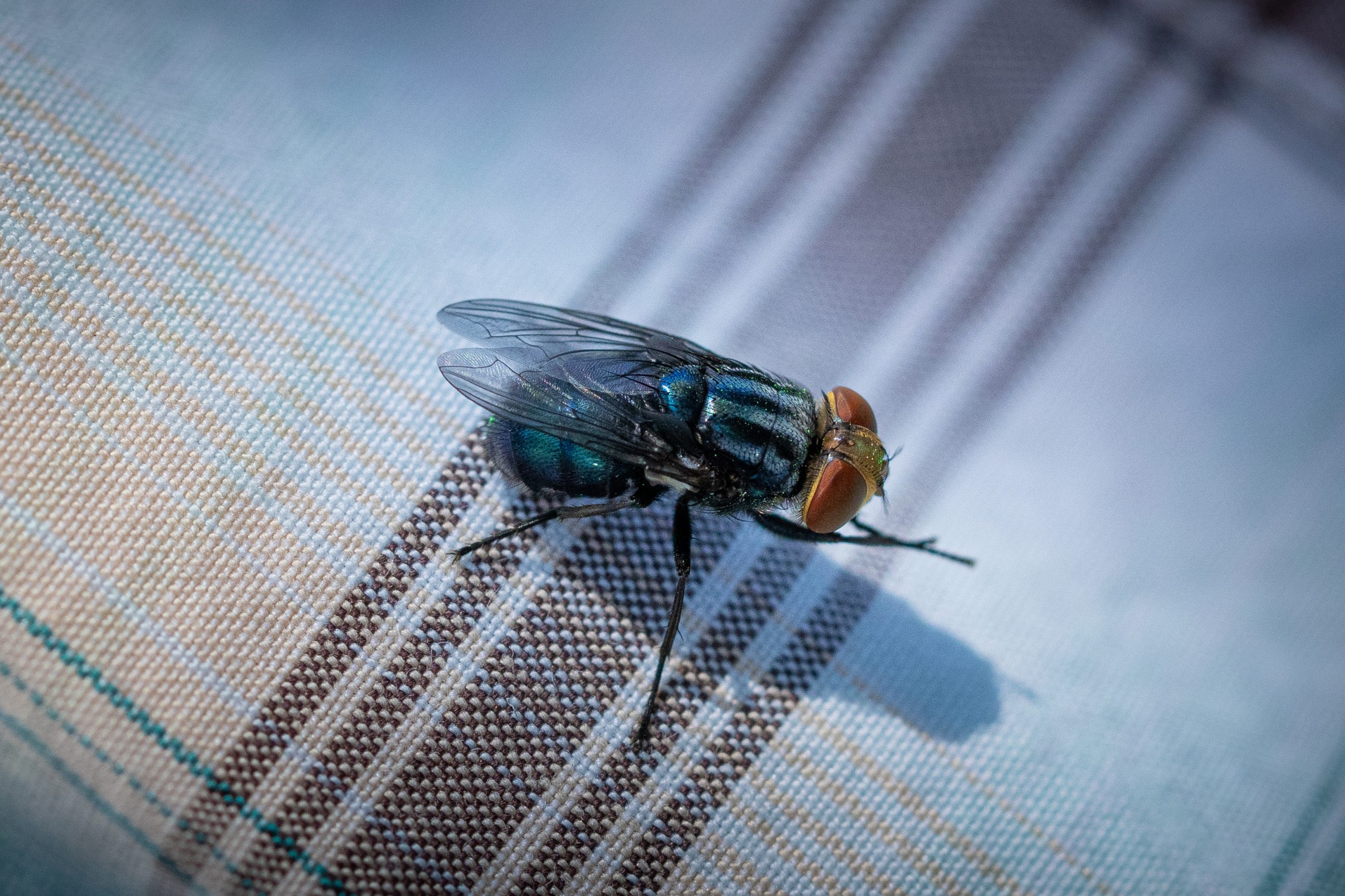
The flies have a distinctive metallic blue color with bright orange eyes. It’s important to remember that the female flies only mate once in their life span, while males mate multiple times.
The burrowing larvae cause significant pain to the animal host and people may observe straw-colored, sometimes slightly bloody colored fluid oozing out of the wound.
“There’s often a very distinctive smell with this wound,” she said. “Most of us alive today have never smelled this, but those that were alive during the prior to eradication says that it is an absolute very distinctive putrid smell, so if you smell that on an animal that has a wound and maggots is a good indication to call in the professionals.”
Olds said it is of utmost importance to report any maggot infested wounds that occur.
“We need to make sure in every case where we have maggots infesting wounds that we are making sure that this is not New World screwworm,” she said.
Once the larvae are past the maggot stage, they drop out of the wound and will go underneath the soil surface to pupate.
“This life cycle is very similar to the flies that we regularly see—a house fly, a stable fly, even a horn fly, and it’s going to live in the soil surface for probably about seven to 10 days,” she said. “But this might be a little bit longer if we’re going into the cooler temperatures into late fall.”
According to Olds, one of the saving graces for Kansans is the climate is not suitable for NWS. They cannot tolerate cold weather, and adults won’t survive air temperatures below 20 degrees Fahrenheit.
“Really once the maggot has dropped off into the ground, if your average daily temperatures are below 46 degrees Fahrenheit, that maggot can’t move to the pupal stage and emerge out,” she said. “For us here in Kansas, it has always been a summer concern. It will likely remain a summer concern.”
She said that’s important to keep in mind. NWS is going to struggle to overwinter in Kansas. Winter helps clear the flies out.
“They can’t make their own body heat, so whatever the temperature is outside, it really determines the temperature that the insect is, and so when it’s cold, they’re very slow and sluggish,” she said. “When it’s warm, they’re much more active, same way as our lizards and turtles.”
In Kansas, peak insect activity happens during the spring, summer, and early fall, reducing activity over the winter. A stable fly or a horn fly can over winter in Kansas just fine.
But NWS is different. Olds said it’s important to know and understand the risks it presents.
“We do not want to have the New World Screwworm overwintering. We would like to have it clear out every single year,” she said. “If populations establish and if it’s not a guaranteed—hopefully our eradication efforts will clear up the populations in the southern United States.”
Even if they do make it to Kansas through a natural spread of the population, every single winter clears it out.
Historical perspective
NWS has been in the U.S. for a “very long time,” she said. Prior to the NWS eradication in the 1960s, in Kansas, there were a few sporadic outbreaks as the population expanded and took advantage of climatic conditions.
“The presence of New World screwworm varied from year to year, and it was really dependent on climate conditions,” she said of the findings of past researchers.
If it was really cold conditions, there wasn’t much of an issue with NWS. When it was warm with a lot of rain, it became more of a problem.
“But there were really two scenarios. There was local expansion of the fly population from those southern overwintering populations,” she said. “The second scenario was where we imported already infested animals, and then we had local spread within an area.”
At one point there was an outbreak in southwest Kansas, with light infestations in Seward, Finney, Scott, Ness, and Ford counties in the 1950s.
“We had one to one and a half percent of the total animal population in this area being infested, and this occurred during September,” she said. “And they think that what happened is we had slightly cooler conditions earlier on in the season.”
In the 1970s Texas, New Mexico and Arizona had many cases of NWS.
Olds mentioned that back then, by moving already infested animals into an area and then because of climate conditions during the summer, NWS spread.
“We had the pupa dropping off, and we had subsequent generations of flies occurring,” she said. “When we have good climate conditions, we’re going to have eggs to adults to females in a couple of weeks, and with that fly population can really expand rapidly.”
The second scenario makes Olds think about stocker cattle in Kansas. It’s been a prominent part of the cattle industry in the state for many years.
“This continues to be an important sector of our economy,” she said.
From the historical documents, Olds said researchers found NWS populations moved from eastern Kansas to the western part of the state later in a season. That shows why it’s so important to report infestations and limit animal movements.
“If we do not identify these infestations early and report them, we will have localized spread, and (it’s) important to note that it did cause considerable damage to the livestock, and this is likely to occur again today,” she said. “When we look at our risks then versus now, right now, as we sit today, our highest risk is going to be through the importation of infested animals.”
Olds said the U.S. Department of Agriculture and the state of Kansas have a “really robust plan” to reduce the risk through surveillance, sterile fly release and movement restrictions.
“If populations establish and overwinter in southern states over time, not this year, but possibly next year, and going forward, we may have movement of flies just northward as climate conditions are facilitating that, and so in that case we have this sort of dual potential for import,” Olds said.
For her, there’s something to think about how Kansas now versus Kansas prior to NWS eradication.
“We move a whole lot more cattle than we did prior to eradication,” she said. “So, being mindful of where we’re sourcing cattle from, making sure that they have proper health certificates when they leave, making sure that when we receive them here in Kansas, that we’re doing a really good job of inspecting those cattle and looking for either wounds or wounds with maggots on them.
Wildlife are another challenge.
“The wildlife landscape is very different now today than it was prior to eradication, and wildlife—I’ve never met a whitetail deer that respected a fence. I never met a bunny that respected a fence either, and so, we have these wildlife areas that are reservoirs for this,” she said. “This flies that are not going to necessarily respect our movement quarantines.”
Olds said people in Kansas can make their best guesses as to what NWS is going to look like based on the historical data from previous infestations, but there is room for flexibility.
“We’ll have to see how this evolves over time,” she said.
As an entomologist, Olds recommends checking the screwworm.gov website to find more information about the insect and to keep up on the cases.
“I really want to leave you on this—if you see something, say something,” she said. “This is a foreign animal disease that needs to be reported to federal authorities.”
Because of the biology of this fly, surveillance and reporting is critical, even though movement restrictions may be the result.
“Our federal authorities are really committed to making sure that this impacts the continuity of business as little as possible,” Olds said. “Nobody wants to impact business, but realistically we need to come back to the biology of the fly.”
Each one of those eggs is problematic. Fly populations can go from a single fly to thousands or millions each year, very quickly when there’s warm and moist conditions, she said.
“Because the way the sterile fly technique works, and we’re trying to overwhelm that wild population, it’s much easier to overwhelm 10 flies than it is to overwhelm 10,000 files or 10 million flies,” Olds said. “Really there’s the success of the sterile insect techniques is centered on producers doing the right thing and reporting infestations.”
Keep in mind if Texas producers don’t report, and the infestation gets out of hand, then it will become Kansas’ problem.
“If Kansas doesn’t report and it gets out of hand, it becomes somebody else’s problem,” she said. “We all have the responsibility to make sure that we’re being good stewards and helping in this eradication issue by reporting anytime you see maggots on a live animal. So, making sure that everybody reports suspected cases as fast as possible is really, really important.”
Kylene Scott can be reached at 620-227-1804 or [email protected].