Economist: Net farm income expected to dip $4.3 billion

Net farm income is forecast to decline $4.3 billion for 2026, according to Carrie Litkowski, a senior economist with the U.S. Department of Agriculture’s Economic Research Service.
Net farm income is forecast at $158 billion, she noted during a Sept. 3 webinar, compared with $163 billion in 2025.
“Much of the expected downward pressure on net farm income in 2026 is being driven by higher production expenses,” Litkowski said.
Net farm income, while continuing to be above the 20-year average, has generally declined over the past five years. Net farm income in 2022 was about $182 billion.
“Like with net income, total cash receipts reached an all-time high in 2022 and have generally trended downward since,” she said.
The United States has about 2 million farms covering about 900 million acres, she said. About 1 million farms account for 90% of production.
Cash receipts from commodity sales are forecast to increase 0.3%, with large offsetting changes in crop receipts and animal and animal product receipts, Litkowski said.
Direct government payments are forecast to increase $19.5 billion, or 70%, driven largely by Agricultural Risk Coverage and Price Loss Coverage payments of about $15 billion, she noted. Production expenses are forecast to increase $21 billion, or 4.5%, led by livestock and poultry purchases and a projected 29% increase in fuel and oil expenses.
Crops
For most types of crop farm businesses, average net cash farm income is projected to increase in 2026, she said, following the sector-wide forecast for higher government payments and higher cash receipts for crops. For farm businesses specializing in corn, average net cash farm income increased in 2025 and is projected to increase again in 2026, which she said would be the highest level since 2021.
Corn cash receipts are projected at $67.3 billion, up from $60.5 billion in 2025.
Farmers specializing in soybeans and wheat are projected to see average net cash farm income rebound in 2026, returning to 2024 levels. Cotton farmers also are expected to see a rebound in 2026.
Soybean cash receipts are estimated at $51.4 billion compared with $46.8 billion a year ago. Wheat cash receipts are estimated at $9.7 billion compared with $9.97 billion a year ago. Cotton cash receipts are estimated at $5.86 billion compared with $5.2 billion a year ago.
Livestock
Animal and animal product cash receipts are projected to decrease to about $287 billion in 2026. In 2025, that value was about $304 billion. Cattle and calf cash receipts are projected to increase from $164.6 billion in 2025 to $170.3 billion.
Hog cash receipts are projected to decrease from $30.9 billion in 2025 to $29.7 billion in 2026. Dairy cash receipts are projected to decrease from $48.9 billion in 2025 to $46.8 billion. Poultry and egg cash receipts are projected to decrease from $81.6 billion in 2025 to $61.5 billion in 2026.
Cattle and calf operations are also projected to see an average net cash farm income decline slightly in 2026 because of higher production expenses forecast. Dairy and hog operations face a similar forecast.
Poultry and egg farms are projected to see negative net cash farm income in 2026.
“This reflects the large decline forecast for egg receipts and higher expenses,” Litkowski said.
Beef cattle continue to stand out in projections, she said.
“We are forecasting or projecting lower prices for eggs, broilers, hogs and milk,” she said. “This $16 billion decline, or the decline for those commodities, is offsetting the expected higher prices for cattle.”
Balance sheets
On the farm sector balance sheet, assets, debt and equity are all forecast to increase nominally this year, Litkowski said. Equity is forecast to rise 2.7%. Average net cash farm income for farm businesses is estimated at $121,700, an increase of about 7% from 2025. For households that operate a farm, median total farm household income is forecast at $108,460, an increase of almost 5%.
Inflation-adjusted farm assets are expected to remain nearly unchanged, debt to rise 1.5% and equity to decline 0.3% in 2026. Solvency ratios and the debt service ratio are forecast to worsen modestly. Chapter 12 bankruptcies are projected to approach two per 10,000 farms, which would be the highest rate since 2020.
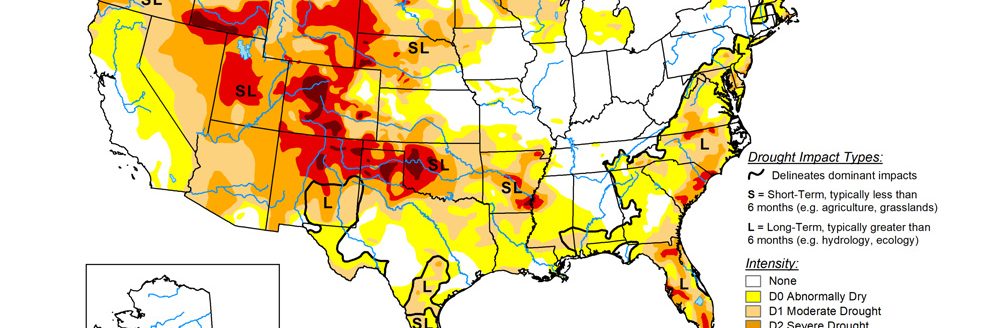
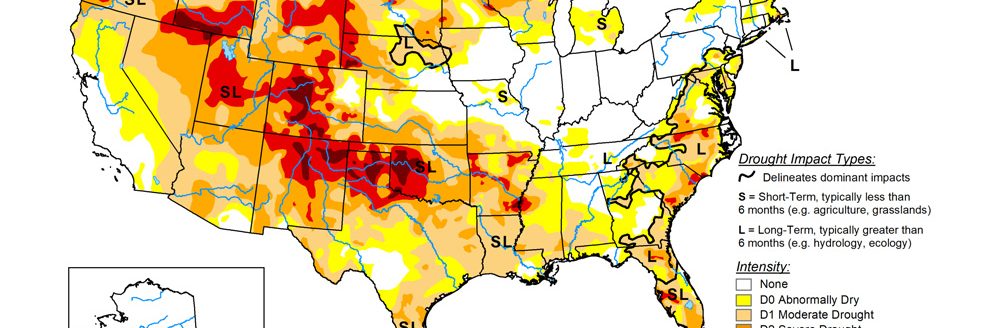
The forecasts were based on the Aug. 12 World Agricultural Supply and Demand Estimates report and do not incorporate later commodity-price momentum or 2026 drought condition, the report noted.
The next net farm income update is scheduled for Dec. 2.
Dave Bergmeier can be reached at 620-227-1822 or [email protected].