End goal in mind when raising calves
One sixth generation cattle producer from southwest Kansas wasn’t planning on coming back home. But now it would take an awful lot of convincing for him to leave.
Laton Dowling, with Dowling Cattle Company near Dodge City, Kansas, had a plan after he graduated from college. Get married and use his master’s in finance.
But like any plan, things changed. He moved back to the area in 2020. He’s now living on the farm on the same land his family homesteaded.
“This was a pig farm before it was anything. And I think at one point they had 150 sows and farrowing houses out all in this pasture,” he said. “I think they had six farrowing houses.”
His grandpa liquidated the pigs when the market “took a dive” in the 1980s and built a feedyard and started buying calves. His dad, Kelly, got started in the cattle business while also running a construction company.
“That’s kind of when the cow-calf thing started. Now we’re strictly cow-calf,” Laton said. “We run some stockers with our calves, but we are mainly cow-calf now.”
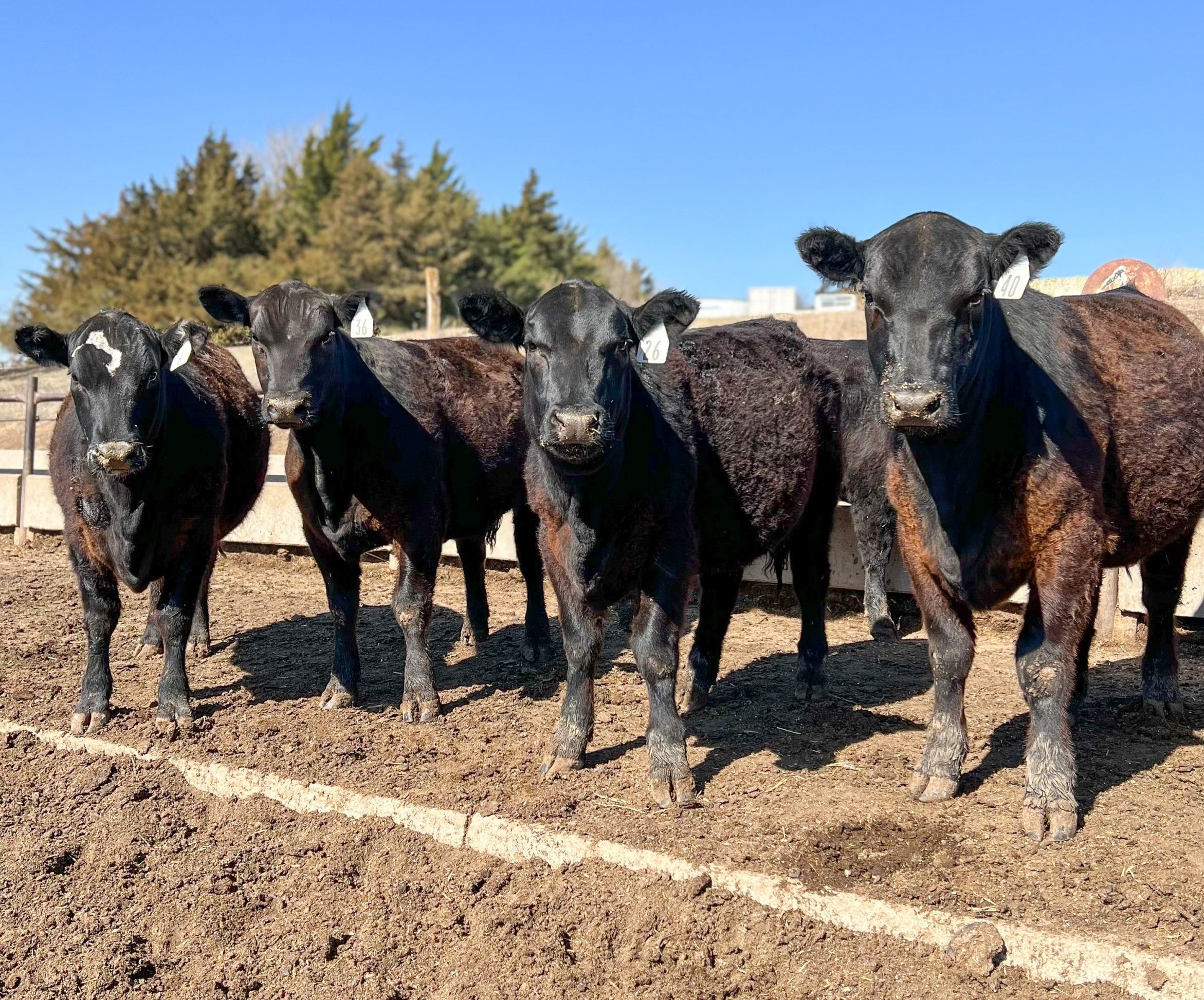
Dowling’s breeding program aims for registered and commercial cattle that are competitive in the show ring—mainly Angus, Simmental and Red Angus. Those that aren’t shown end up either in Dowling Beef freezers for sale to consumers or will be marketed once they reach about 900 pounds. Dowling will do the breeding and get the calves going. His older brother Tanner takes the show prospects from there.
“We’ve kind of leaned into that with the genetics,” he said. “I’ve always liked the Simmental breed. It adds a little bit of power and a little bit of bone for those stocker calves when they go to town—just that extra weight. It pays a little bit at the bunk.”
Dowling recently bought what he calls a “promotional bull” in the Simmental breed, and he’s hopeful about the quality of calves that will come from him.
On the Red Angus side, the Dowlings bought a cow from Wildcat Creek when they had a total dispersal sale and have turned her into a donor cow. Recipient cows have carried her eggs/embryos for the past few years.
“We’ve had some success with selling some Red Angus. We actually sold our first two bulls out of her this year,” Dowling said. “That’s kind of why I added that breed in there, just mainly because of that one cow. We’ve kept some calves out of her. Now they’re all at Tanner’s. I just put the eggs in and raise the babies, and then he takes them.”
Although showing cattle is a big part of the business, Dowling said it’s a fine line to walk when having show animals and commercial cattle.
“I think we’re trying to walk that real fine line of having the highest quality of cattle we can raise to do both,” he said. “We put in the embryos and put all that stuff in to raise show cattle. But at the same time, we want to keep those calves that that aren’t quite as high quality to be the show type, but will make good moms. Then we turn them into moms, and we try to build those genetics and build that herd.”
Stocker calves are how you make money in the cattle business right now, Dowling said. The calves are selling for record highs.
“Everything that we put an egg in or AI, we have low weight birth Angus that we clean up with. Those are the majority of our herd, because when you AI and embryo, you’re looking at a 30% to 50% conception rate,” he said. “But what makes the money is having a live baby on the ground.”
Dowling strives to make sure the calves are alive and healthy, so they can make it to the sale barn when it’s their time to be marketed.
The calves destined for the show pen are often sold private treaty and this year the Dowlings had their first online sale on their website.
The commercial calves will wean in September or October and will run on irrigated wheat that’s planted after corn. He aims for that 850- or 900-pound mark. He’s had luck selling his calves at the local sale barn or directly off the farm with Bucyrus, Kansas-based Foote Cattle Company.
“That’s worked really well, too,” he said. “If Dodge’s markets looking good, then we take them to Dodge. If we can save that money on the commission, then we’ll sell them straight off the farm.”
Beef business
Dowling has always had beef on his plate, and when he was playing football at Kansas State University, his mom, Roxanne, would bring him meat from home. His teammates and their families started asking where they could get the same quality beef.
“It really kind of started from that. Their parents started buying it from me for them in college,” he said. “And then on up to the coaches, staff and the trainers were all like, well, where we get this?”
It just “sort of happened” from all of that, he said.
“It was pretty organic the way it kicked off and then when I moved back here, it just, it really took off,” he said. “Because it just works out—you raise the cattle. You don’t have to purchase a fat animal right now.”
Dowling said some consumers are shocked at the price of an animal that would be fattened to harvest and he understands.
“It’s hard to convey a message to a small family that $1,600 worth of beef is going to last you a long time,” he said. “But it’s a big upfront investment. But you would be surprised how fast a family of four can eat a quarter of beef.”
He’s tried to keep Angus genetics in the cattle that do go into the beef he’s selling. His bull ranks best for his ribeye.
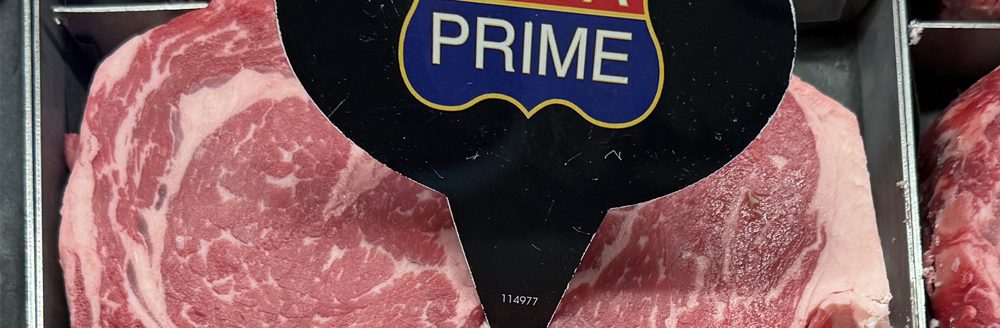
“If they are steers, mainly I keep them and we feed them, and that’s what I utilize for my beef,” he said. “But I haven’t taken a beef to Meade that hasn’t graded Prime yet. Knock on wood.”
The genetics and feed program at Ford County Feed Yard has kept him right on track.
“Neal (Draper)’s been awesome to help me with that, because he knows how to feed them and that’s what’s key when you get past what we can do here at that 900-pound mark,” Dowling said.
The steam-flaked corn at Ford County is something Dowling said is key to the program, and nutritionists. He’s tried to mix a ration, but for a small pen—10 head—it’s hard to get just right.
“It’s an art, it’s a science,” he said. “But it’s funny, because I have my friends out here that are from the city, and you start telling them about how you do it. My cattle have a nutritionist. I don’t even have a nutritionist. My cattle have a more balanced diet than I do.”
Dowling said there’s much more to feeding cattle that produce a Prime carcass than just throwing a hay bale out in front of them. He enjoys working with a supplement company and tweaking other rations they use in the operation.
“They have a ton of tools online, so you can even do it. You can mess with it yourself with an Excel spreadsheet. It’s a plug-and-play thing,” he said. “They have it down to an art.”
Plus, he has a love for feeding cattle and tweaking things he can do just to see how the cattle respond to it.
Family influence
Dowling admits he had a pretty good teacher when it came to taking care of the cattle. His mom was in charge of the cattle herd since his dad was working construction, and Laton would come back and help with calving season every year. When Roxanne was diagnosed with ovarian cancer the family had to rally.
“When mom got sick, that really kind of amplified my want to come back, because dad was still building and trying to do it by himself, and mom was not much help anymore,” he said.
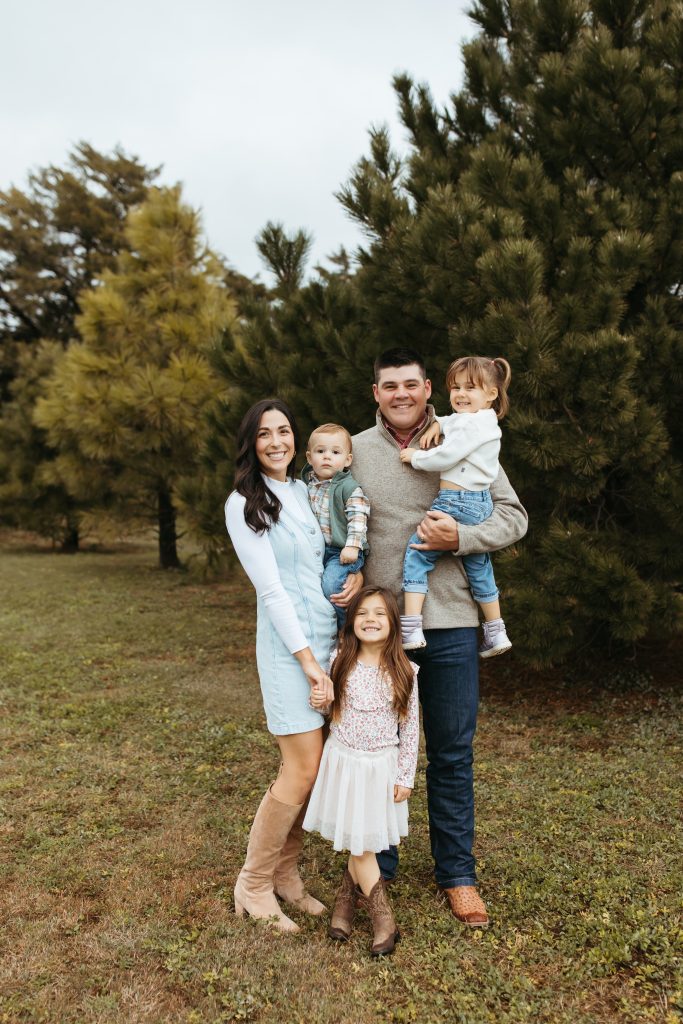
When Dowling came back home to help with calving in 2020, he planned to stay from February through mid-April. His first daughter was going to be born in May in Kansas City, so they’d planned to move back after her birth and after Sophia graduated from dental school.
“End of March, beginning of April, they told her, ‘Hey, congratulations. You’re a dentist.’ They shut the school down,” he said. “She had all of her tests, and everything done, and all she had to do was her board certification. That’s all she had left.”
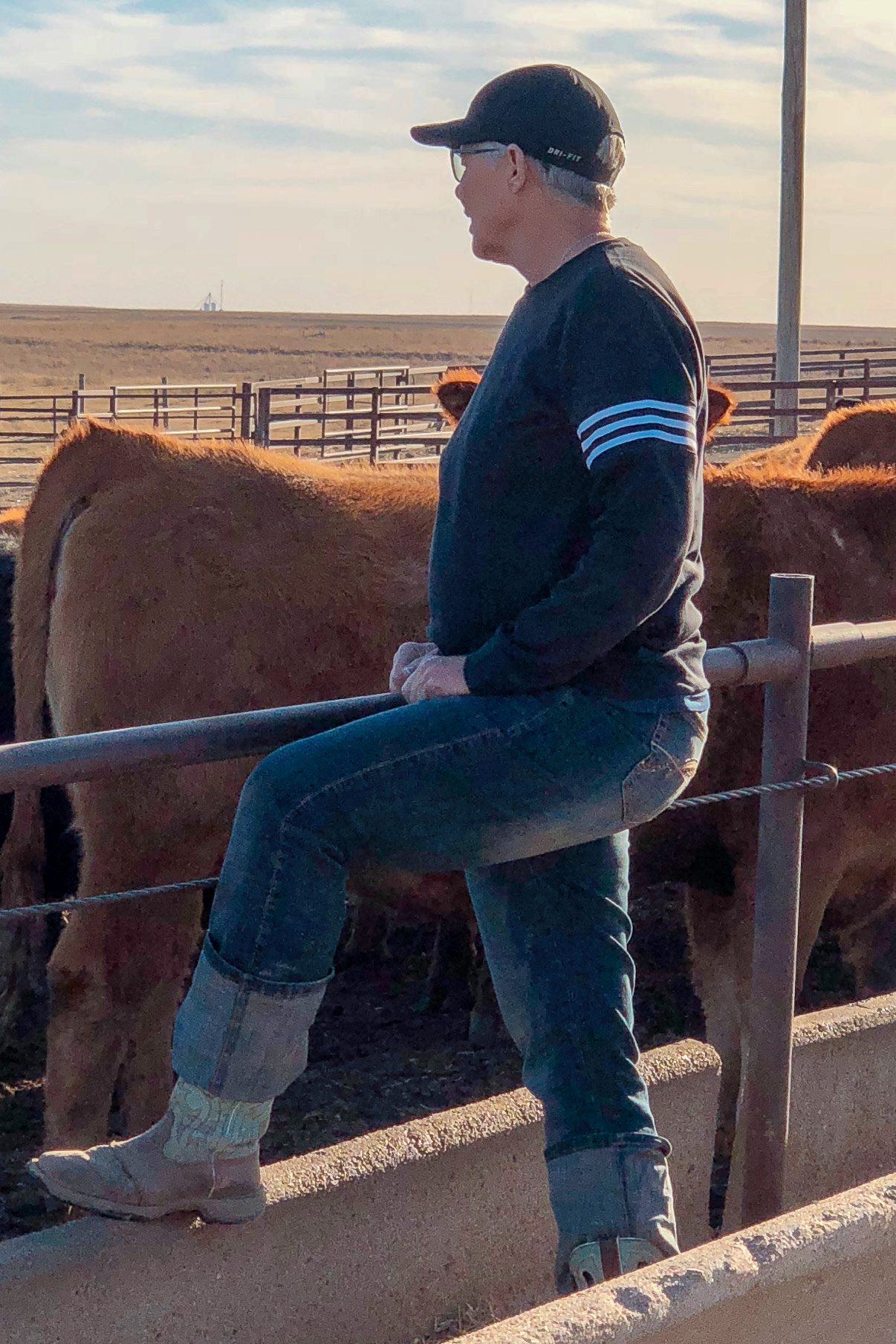
Once she completed her requirements, her graduation ceremony was held online, and their first daughter was born the next day. Everything has panned out for Dowling, and they’ve grown the cattle herd some since his dad retired.
“It probably doubled it in size since I’ve moved home and I’ve gotten really lucky, he said. “We’ve gotten rain since I’ve moved home. We’ve got more cattle. We’ve acquired some more grass. Now, if we can get it to rain this year. We’ll be cooking.”
He appreciates how fortunate he’s been with everything and how the cattle market has been.
“I love it. It’s a great way to raise your kids. I wouldn’t know how to raise them anywhere else besides here.”
For more information about Dowling Beef visit www.dowlingbeef.com. For more information about the cattle visit www.dowlingcattle.com.
Kylene Scott can be reached at 620-227-1804 or [email protected].